






What's Happening?
Toyota Motor North America has entered into a 15-year renewable energy agreement with Constellation, a leading clean energy producer. This agreement is designed to support the development of new solar generation in Texas and advance Toyota's sustainability
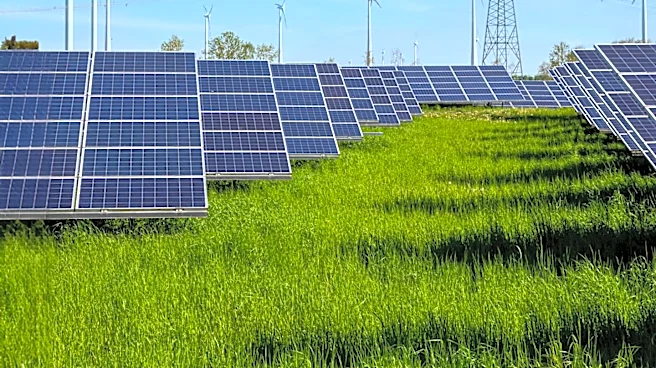
objectives. Under the terms of the deal, Toyota will receive Renewable Energy Certificates (RECs) generated by the Milano Solar project, which is being developed by Ferrovial, a global infrastructure company. Constellation, backed by Toyota's commitment, has also secured a separate long-term power purchase agreement (PPA) with the Milano Solar project for over 115 megawatts of solar capacity, equating to approximately 246,000 megawatt-hours of renewable energy annually. The Milano Solar project, a 203.97-megawatt facility located in Milam County, Texas, is expected to commence commercial operation in September 2027. This initiative is a key component of Toyota's North American 8th Environmental Action Plan, which aims to match 100 percent of its electricity consumption with renewable energy through a combination of Virtual Power Purchase Agreements, RECs, and onsite solar.
Why It's Important?
This agreement is significant for several reasons, impacting both the renewable energy sector and corporate sustainability efforts in the U.S. For Toyota, it underscores a tangible commitment to its environmental goals, specifically its target of achieving 100% renewable energy for its North American operations. This move can enhance Toyota's brand reputation among environmentally conscious consumers and investors, potentially leading to increased market share and investor confidence. For Constellation, the long-term commitment from a major corporation like Toyota provides financial stability and validates its 'Offsite Renewable (CORe) solutions' product, encouraging further investment in large-scale renewable projects. The development of the Milano Solar project in Texas will contribute to the state's renewable energy infrastructure, creating jobs and reducing reliance on fossil fuels. This partnership also demonstrates a growing trend of large corporations directly investing in renewable energy projects to meet their sustainability targets, which can accelerate the transition to a cleaner energy grid across the U.S. It sets a precedent for other companies seeking to reduce their carbon footprint and highlights the economic viability of renewable energy solutions.
What's Next?
The Milano Solar project is slated to begin commercial operation in September 2027. Following this, Toyota will start receiving the Renewable Energy Certificates (RECs) generated by the project, which Constellation will retire over the 15-year agreement term. This will directly contribute to Toyota's goal of matching 100 percent of its electricity consumption with renewable energy. The success of this partnership could encourage other major corporations to pursue similar long-term renewable energy agreements, further stimulating growth in the U.S. solar energy market. Constellation may leverage this high-profile agreement to attract more corporate clients for its CORe solutions, expanding its portfolio of clean energy projects. Additionally, Ferrovial, as the developer of the Milano Solar project, could see increased opportunities for similar large-scale renewable energy developments. The broader impact could include a continued shift in corporate energy procurement strategies towards direct investment in renewable sources, influencing policy discussions around renewable energy incentives and infrastructure development at both state and federal levels.
Beyond the Headlines
This agreement extends beyond a simple energy purchase, reflecting a deeper shift in corporate responsibility and the energy landscape. It highlights the increasing pressure on multinational corporations like Toyota to demonstrate concrete actions towards environmental sustainability, moving beyond mere pledges to direct investment in renewable energy infrastructure. The use of Renewable Energy Certificates (RECs) in this agreement is crucial, as it allows companies to claim the environmental benefits of renewable energy even if they are not directly consuming the power from the specific project. This mechanism is vital for scaling corporate renewable energy procurement. Furthermore, the partnership between an automotive giant, an energy provider, and an infrastructure developer showcases the complex, multi-stakeholder collaborations required to achieve significant decarbonization goals. This trend could lead to a more decentralized and diversified energy grid, with corporate entities playing a more active role in financing and developing clean energy sources, thereby influencing long-term energy policy and market structures in the U.S. It also underscores the growing importance of Texas as a hub for renewable energy development.