




What's Happening?
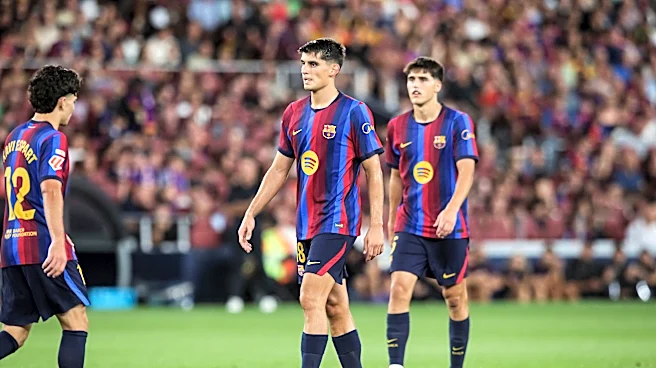
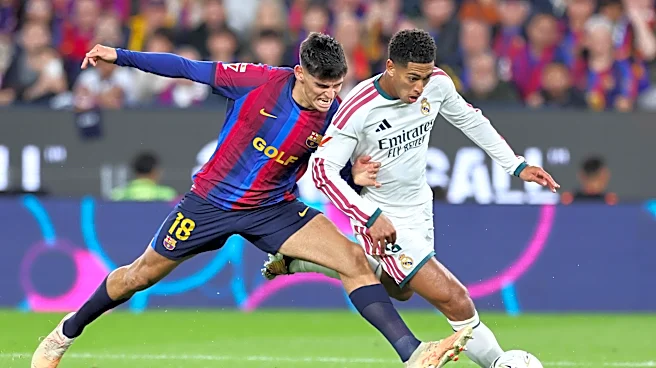
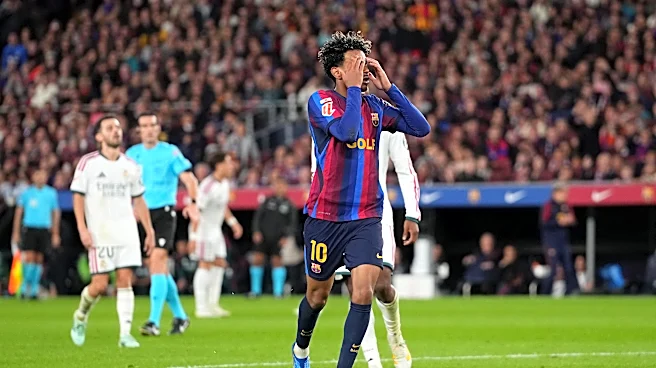
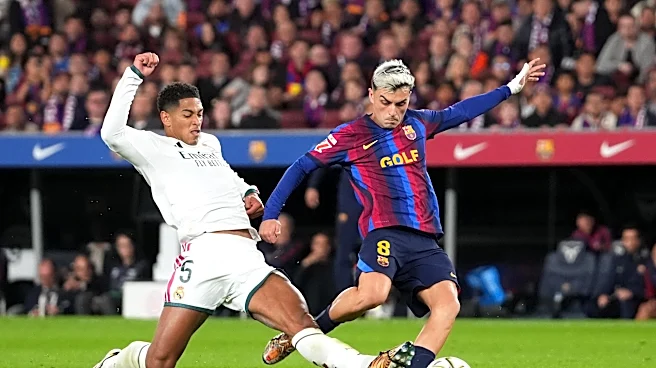
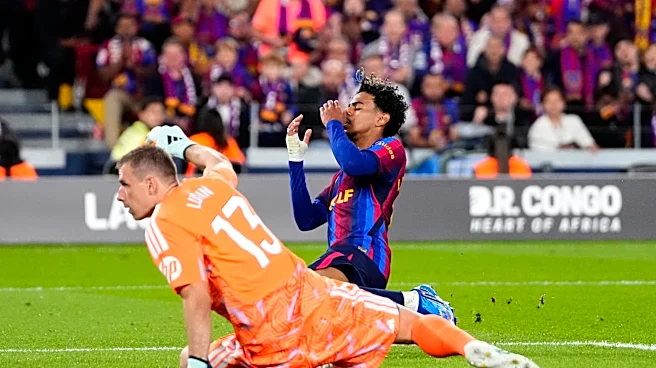
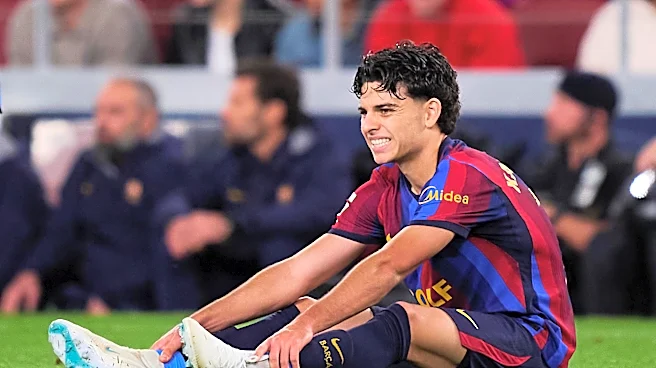
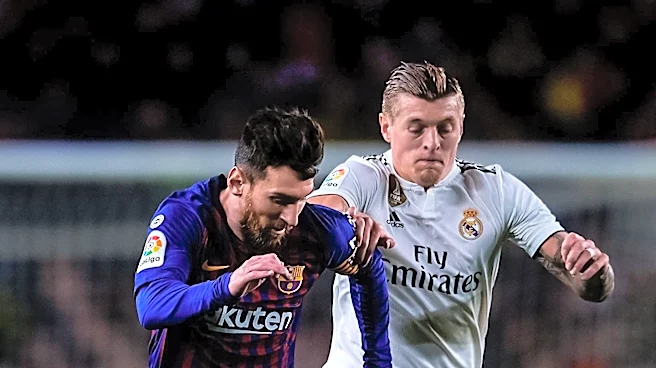
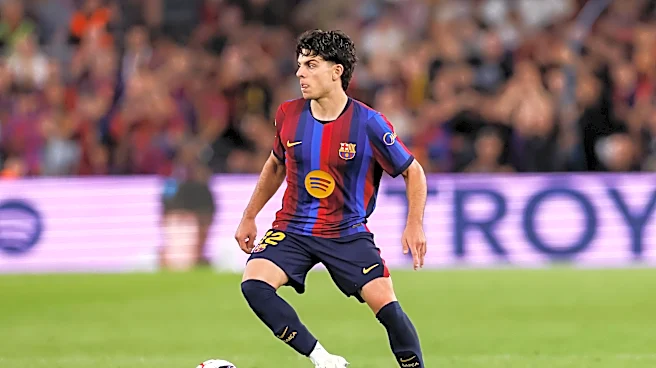
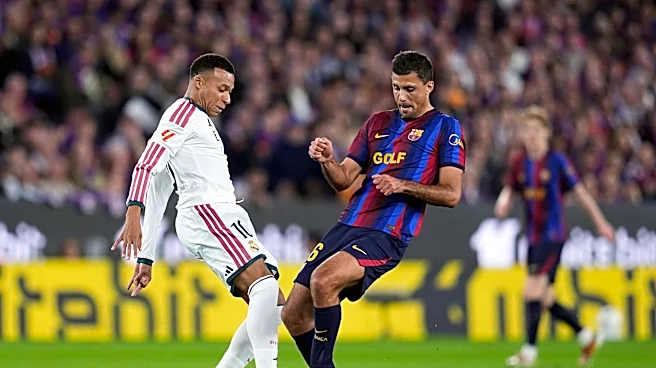
Former Real Madrid midfielder Toni Kroos has offered his analysis of Barcelona's recent Clasico defeat, highlighting the performances of specific players. According to Kroos, Barcelona's Pedri and Raphinha appeared 'uncomfortable' during the match, leading
them to make uncharacteristic errors. He attributed Real Madrid's victory to their superior intensity and team defense, noting that Madrid players were well-positioned and won almost every duel. Kroos also commended the tactical approach, suggesting that Real Madrid made Barcelona suffer by playing with the ball, a strategy that exploits Barcelona's vulnerability when their pressing game is ineffective. This analysis comes after Hansi Flick's Barcelona side experienced their first La Liga defeat of the season.
Why It's Important?
This analysis from a respected figure like Toni Kroos provides significant insight into the tactical and individual performance aspects of a high-stakes football match like El Clasico. For Barcelona, understanding these critiques is crucial for addressing weaknesses, particularly concerning key players like Raphinha and Pedri. Their discomfort and errors, as noted by Kroos, could indicate underlying issues in tactical deployment or player form that need immediate attention. For Real Madrid, Kroos's comments validate their strategy and execution, reinforcing confidence in their team's defensive solidity and intensity. The outcome of such a prominent match, and the subsequent expert analysis, can influence team morale, future game strategies, and player development for both clubs, impacting their performance in the ongoing La Liga season and other competitions.
What's Next?
Following this defeat and analysis, Barcelona is expected to respond in their upcoming match against Alavez. The team will likely review their performance, particularly focusing on the areas highlighted by Kroos, such as player comfort and defensive intensity. Coach Hansi Flick may consider adjustments to tactics or player roles to mitigate the issues observed in the Clasico. For Raphinha and Pedri, this critique could serve as motivation to refine their game and overcome any discomfort they experienced. The club's ability to address these concerns will be critical in maintaining their position at the top of the La Liga table and ensuring a strong finish to the season. Future matches will reveal how Barcelona integrates these lessons and adapts their approach.
Beyond the Headlines
The detailed analysis of individual player performances in a major football match like El Clasico extends beyond immediate results, touching upon the psychological and developmental aspects of professional athletes. When a player of Raphinha's caliber is noted as 'uncomfortable,' it can reflect the immense pressure of such games and the mental fortitude required to perform at the highest level. This kind of scrutiny can impact a player's confidence and public perception, potentially influencing their market value or future career trajectory. Furthermore, the tactical insights offered by Kroos underscore the evolving nature of football strategies, where adaptability and exploiting opponent weaknesses are paramount. It highlights how even top teams like Barcelona can be vulnerable when their core strengths are neutralized, prompting a continuous cycle of innovation and counter-innovation in the sport.