








What's Happening?
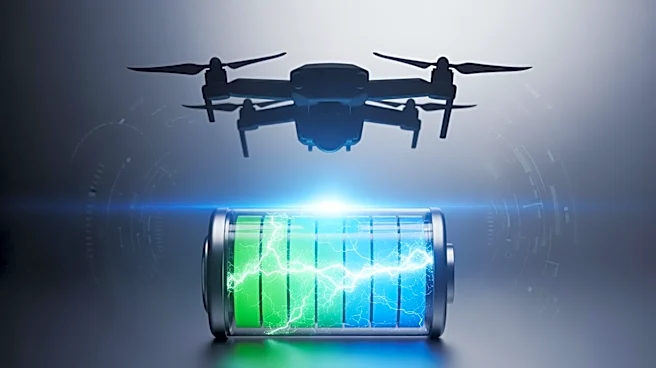
In a recent discussion on the Catalyst with Shayle Kann podcast, energy investor Andy Lubershein proposed that military drones, rather than electric vehicles, could be the unexpected catalyst for advancements in battery technology. Lubershein highlighted
that the Pentagon's willingness to pay a premium for high-performance batteries could drive the development of triple-density batteries, which automakers are unlikely to fund due to cost constraints. This perspective suggests that the defense sector's demand for advanced battery technology could lead to significant breakthroughs, benefiting drone manufacturers like AeroVironment, Ondas, and Red Cat. The U.S. Department of Defense's FY2027 budget request includes substantial funding for autonomous systems, which could further support this development.
Why It's Important?
The potential shift in battery technology funding from the automotive to the defense sector could have significant implications for both industries. If the defense sector successfully drives the development of higher-density batteries, it could lead to a technological leap that benefits not only military applications but also civilian sectors, such as heavy-duty transportation. This shift could position drone manufacturers to capitalize on increased demand and procurement budgets, potentially leading to substantial growth in the industry. The broader impact could also include advancements in energy storage solutions, influencing various sectors reliant on battery technology.
What's Next?
As the Department of Defense continues to allocate significant resources towards autonomous systems, the focus on developing advanced battery technology is likely to intensify. Drone manufacturers may see increased demand as the military seeks to enhance its capabilities with more efficient energy solutions. The success of this initiative could prompt further investment in battery technology, potentially leading to spillover benefits for other industries. Stakeholders in the defense and technology sectors will be closely monitoring these developments, as they could reshape the landscape of energy storage and utilization.