






What's Happening?
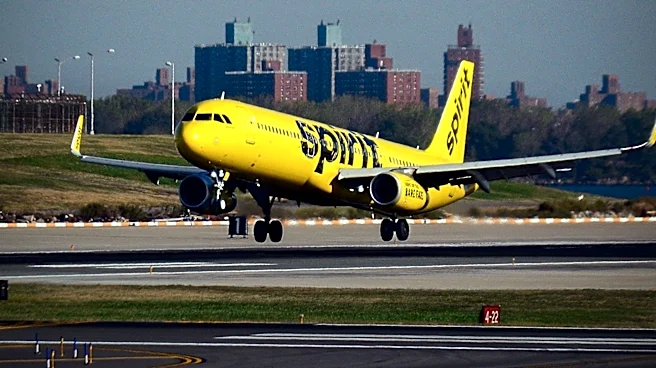
Spirit Airlines, a U.S.-based carrier, ceased all operations on May 2. This decision came after a proposed government rescue package failed to materialize and lenders declined to extend new capital to the airline. Spirit Airlines had been facing financial
difficulties, operating unprofitably even before a significant spike in jet fuel costs. The airline had previously negotiated an agreement with its lenders, which was intended to guide it out of its second bankruptcy by late spring or early summer. However, the dramatic increase in jet fuel prices severely disrupted these financial projections, complicating its planned exit from bankruptcy and ultimately leading to the cessation of its services. Spirit Airlines is one of several carriers globally that have faced distress since the onset of the US–Israel–Iran war, which has contributed to volatile fuel prices.
Why It's Important?
The cessation of Spirit Airlines' operations has significant implications for the U.S. airline industry and its consumers. Spirit was known for its ultra-low-cost model, which provided affordable travel options to a segment of the market. Its departure reduces competition, potentially leading to higher fares on routes it previously served, especially for budget-conscious travelers. For the broader industry, Spirit's collapse highlights the extreme vulnerability of airlines to fluctuating fuel costs, particularly for those with thin margins and without robust hedging strategies. This event could prompt other airlines to re-evaluate their financial resilience and hedging policies in an unpredictable global economic and geopolitical climate. It also underscores the challenges faced by carriers in securing government bailouts or additional private financing during periods of economic uncertainty.
What's Next?
The immediate next steps for Spirit Airlines will likely involve formal bankruptcy proceedings to liquidate assets and address creditor claims. Travelers holding tickets with Spirit Airlines will need to seek refunds or alternative travel arrangements, potentially facing difficulties depending on their payment methods and travel insurance coverage. For the U.S. airline market, other carriers may look to absorb some of Spirit's former routes, leading to potential shifts in market share and route networks. Regulatory bodies may also scrutinize the competitive landscape to ensure that the reduction in carriers does not lead to anti-competitive practices. The event could also trigger a broader discussion within the industry and government about mechanisms to support airlines during periods of extreme financial stress, especially concerning external factors like fuel price volatility.
Beyond the Headlines
The grounding of Spirit Airlines extends beyond immediate operational and financial impacts, touching upon broader economic and consumer welfare issues. The incident underscores the precarious nature of the low-cost airline model, which relies heavily on cost efficiency and high load factors, making it particularly susceptible to external shocks like fuel price surges. This could lead to a re-evaluation of business models within the airline industry, potentially favoring more resilient, albeit less budget-friendly, operational strategies. Furthermore, the failure of a significant low-cost carrier raises questions about consumer access to affordable air travel and the potential for reduced mobility for certain economic demographics. It also highlights the interconnectedness of global geopolitical events and their direct impact on domestic industries and consumer services, emphasizing the need for robust risk management and contingency planning in critical sectors.