





What's Happening?
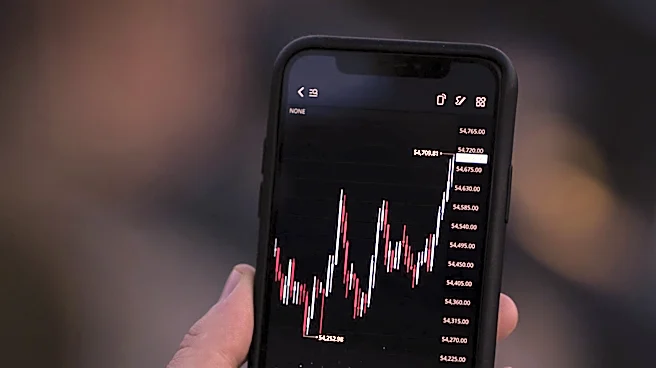
The stock market experienced significant volatility following recent election results, demonstrating rapid shifts in investor sentiment. Immediately after election day, the market saw a dramatic rise, only to reverse course the very next day, losing all
gains and more. This rapid fluctuation is exemplified by the performance of the Vanguard S&P 500 ETF. This event illustrates Benjamin Graham's 'Mr. Market' concept, where the market swings between extreme enthusiasm and pessimism. Graham, a mentor to Warren Buffett, introduced this fictional character to explain how market prices can be irrationally high or low, often driven by emotion rather than fundamentals. The post-election trading period saw investors collectively act like an optimistic Mr. Market, followed by a pessimistic one, leading to a 'whipsaw' effect for those attempting to time the market. Ultimately, the indexes settled back to pre-rally levels, suggesting that short-term trading based on emotional reactions yielded no lasting financial impact for those who engaged in it.
Why It's Important?
This market behavior underscores a crucial lesson for investors: emotional reactions to short-term events, such as election outcomes, can lead to detrimental investment decisions. The rapid up-and-down movement post-election highlights the futility of trying to 'time the market.' Investors who attempted to capitalize on the initial rally or subsequent dip likely faced losses or missed opportunities, as the market quickly corrected itself. This reinforces the investment philosophy advocated by figures like Warren Buffett and Benjamin Graham, which emphasizes a buy-and-hold strategy focused on the fundamental quality of companies rather than reacting to daily market mood swings. For individual investors, this means that maintaining a disciplined approach and focusing on long-term value can help navigate periods of market volatility, preventing emotional trading from eroding wealth. The event serves as a practical demonstration of how Wall Street can act as a 'voting machine' in the short term, driven by sentiment, but ultimately functions as a 'weighing machine' over the long term, reflecting underlying company value.
What's Next?
In the aftermath of such market volatility, investors are likely to be reminded of the importance of a long-term perspective. Financial advisors and investment strategists will likely reiterate advice to avoid making impulsive decisions based on daily market fluctuations or political events. The focus will shift back to fundamental analysis of companies and diversified portfolio management. For those who remained invested in well-run companies throughout the post-election period, the event will likely have had no significant lasting impact on their finances, reinforcing the efficacy of a steady investment approach. Future market reactions to political or economic news may continue to exhibit similar short-term emotional swings, but the underlying principle of focusing on company quality and long-term growth is expected to remain a cornerstone of sound investment strategy. This event may also lead to increased educational efforts for investors on behavioral finance and the dangers of emotional trading.
Beyond the Headlines
The post-election market volatility reveals deeper insights into investor psychology and market efficiency. The rapid reversal suggests that while initial reactions to news can be strong, the market often quickly re-evaluates and corrects itself, indicating a degree of underlying efficiency in processing information over a slightly longer timeframe. This phenomenon also highlights the collective irrationality that can grip market participants, even sophisticated ones, when faced with uncertainty or perceived catalysts. Ethically, it raises questions about the responsibility of financial media and analysts in framing market events, as sensationalized reporting can exacerbate emotional trading. Culturally, the 'Mr. Market' analogy continues to resonate because it simplifies complex market behavior into an understandable human-like persona, making it easier for investors to grasp the importance of emotional detachment. This event serves as a timeless case study in the ongoing battle between rational investment principles and the powerful human tendency to react emotionally to perceived opportunities or threats.