
What's Happening?
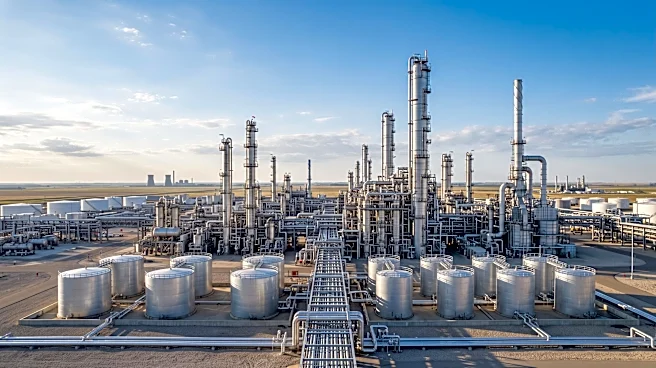
Exxon Mobil Corporation has reported robust third-quarter 2026 profits, primarily driven by increased production from its U.S. refineries. This surge in refining output capitalized on high diesel fuel
prices, which were influenced by geopolitical disruptions in the Middle East. The integrated energy company announced a quarterly dividend of $1.07 per share, payable on December 10, marking a 3.9% increase. This latest hike extends Exxon Mobil's streak of annual dividend increases to 44 consecutive years. The annualized dividend now stands at $4.28 per share, offering a yield of 2.53%. TD Cowen analyst Jason Gabelman reiterated a buy rating on Exxon Mobil stock, raising his price target to $193 from $180, citing expectations of higher downstream earnings and increased mid-cycle margins. Gabelman noted that the strength in Exxon Mobil's refining business is currently offsetting headwinds related to the Middle East.
Why It's Important?
Exxon Mobil's strong financial performance and consistent dividend increases are significant for U.S. investors seeking stable income, especially in a volatile market environment characterized by AI trade concerns, macroeconomic uncertainties, and geopolitical tensions. The company's ability to leverage refining margins amidst global supply tightening highlights the critical role of integrated energy producers in meeting domestic and international fuel demands. The analyst's positive outlook, despite geopolitical challenges, underscores the resilience of Exxon Mobil's business model and its strategic adjustments, such as increasing ownership in LNG projects to reduce Middle East concentration. This move is crucial for long-term stability and diversification, potentially mitigating future risks associated with regional instability. For the broader U.S. economy, a strong Exxon Mobil contributes to energy security and can influence market sentiment in the energy sector.
What's Next?
Exxon Mobil plans to maintain its $20 billion share-buyback program for 2027, a decision that analysts believe reduces the pro-cyclicality of the buyback strategy. The company is also strategically increasing its ownership in Liquefied Natural Gas (LNG) projects, aiming to reduce its Middle East concentration from 75% to 50% over time. This diversification is expected to lower the likelihood of future mergers and acquisitions focused solely on diversification. Beyond LNG, Exxon Mobil anticipates future growth in the 2030s from key regions such as Guyana, Kashagan, Permian, and potentially Venezuela. These strategic investments and operational adjustments indicate a clear path for sustained growth and profitability, aiming to solidify its position in the evolving global energy landscape.
Beyond the Headlines
The sustained performance of Exxon Mobil, particularly its ability to generate robust profits from refining operations during periods of geopolitical disruption, highlights the complex interplay between global events and energy markets. The company's long-standing commitment to increasing dividends, now for 44 consecutive years, reflects a deep-rooted corporate strategy focused on shareholder returns and financial stability, which can be a beacon for investors during economic uncertainty. Furthermore, Exxon Mobil's strategic shift towards reducing its reliance on Middle Eastern assets through increased LNG project ownership signals a broader industry trend towards geographical diversification and energy transition. This proactive approach not only aims to secure future growth but also addresses the evolving geopolitical risks and energy demands, potentially influencing long-term investment patterns in the energy sector and shaping future energy policies.