





What's Happening?
HBO's 'The Gilded Age' premiered its fourth season on November 1, 2026, quickly rising to the top of streaming charts. The historical drama, set in late 19th-century New York City, focuses on the lives of the wealthy elite during the Industrial Revolution,
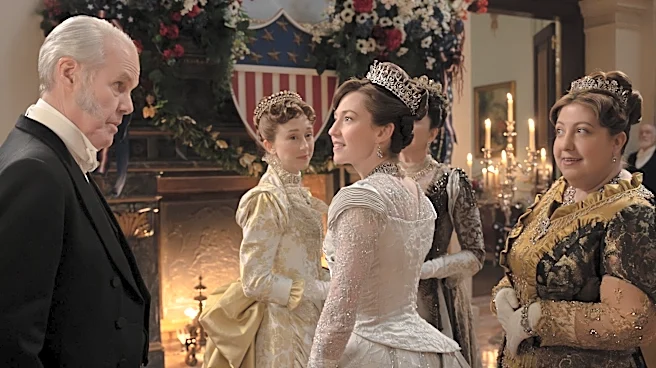
exploring themes of old versus new money, political intrigue, and complex relationships. The season's debut episode features significant plot developments, including Marian Brook and Larry Russell's ongoing romantic complications, and George Russell's concerns over anti-monopoly legislation. The series is known for its lavish production quality, particularly its costuming, and continues to deliver dramatic and entertaining storylines. New episodes are released weekly on Sundays in the U.S. on HBO and HBO Max, with the season finale scheduled for December 20, 2026.
Why It's Important?
The continued success of 'The Gilded Age' highlights a sustained public interest in historical dramas that blend factual context with fictional narratives. The show's exploration of the Gilded Age, a period of immense wealth disparity and rapid industrial growth in the U.S., resonates with contemporary discussions about economic inequality and the influence of powerful families. The series also touches upon the societal roles and challenges faced by women and minority groups during this era, as seen through characters like Peggy Scott, who is inspired by pioneering Black women in journalism and medicine. The show's ability to draw viewers into the intricate social dynamics and political undercurrents of the past underscores the enduring appeal of well-produced period pieces in the entertainment landscape.
What's Next?
Viewers can anticipate weekly new episodes of 'The Gilded Age' season 4 every Sunday on HBO and HBO Max until the season finale on December 20, 2026. The ongoing storylines are expected to delve deeper into the political and social challenges faced by the characters, including George Russell's battle against anti-monopoly legislation and the evolving relationships among the New York elite. The series will likely continue to explore the clash between old and new money, as well as the personal struggles of characters like Marian Brook and Peggy Scott as they navigate societal expectations and pursue their ambitions. The show's creators have indicated a darker tone for this season, suggesting more intense drama and conflict in the episodes to come.
Beyond the Headlines
Beyond its entertainment value, 'The Gilded Age' offers a cultural lens through which to examine the foundations of modern American society. The show's depiction of 'robber barons' and their accumulation of wealth, alongside the nascent infrastructure development of railroads and electricity, draws parallels to contemporary debates about corporate power and technological advancement. The series also subtly addresses the performative nature of wealth and social status, where appearances often masked deeper societal issues like greed and inequality, a concept Mark Twain originally critiqued with the term 'Gilded Age.' The show's meticulous attention to historical detail in areas like fashion and social customs, while sometimes taking creative liberties, provides a vivid, albeit dramatized, window into a pivotal period of U.S. history, prompting reflection on how past societal structures and power dynamics continue to influence the present.