




What's Happening?
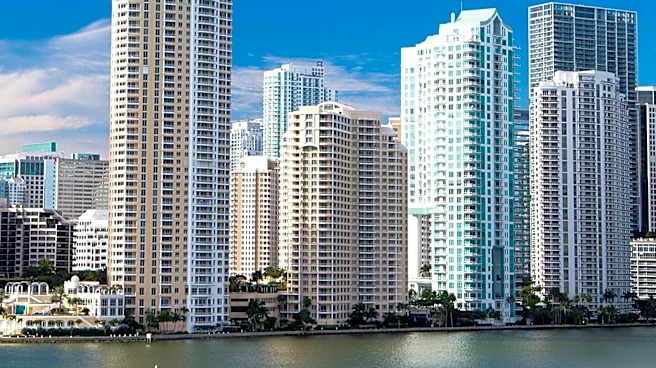
The Miami luxury condo market experienced steady growth in Q3 2026, marked by increased sales performance for the third consecutive quarter. According to Sep Niakan, Blackbook Properties’ founder and CEO, the quarter saw stable pricing, a 5% year-over-year
increase in closed sales, and a 26.2% decline in months of inventory. Coconut Grove emerged as the sole seller's market with only six months of inventory, also recording a 27.4% increase in median sale price despite a slight dip in closed sales. While some markets remained soft, median sale prices strengthened in high-tier segments, indicating a trend of buyers becoming more selective. Notable investments in Q3 included Ken Griffin’s $3-billion pledge to Carnegie Mellon’s planned Wynwood campus and Alphabet’s new Brickell offices.
Why It's Important?
The sustained growth in Miami's luxury condo market is significant for the U.S. real estate sector, particularly as it reflects continued wealth migration and robust investment activity. The increasing selectivity among high-tier buyers suggests a maturing market where quality and location are paramount, potentially influencing development strategies and pricing across other luxury markets nationwide. The substantial investments from figures like Ken Griffin and corporations like Alphabet underscore Miami's growing appeal as a business and innovation hub, which in turn fuels demand for high-end residential properties. This trend could lead to further economic development and job creation in the region, benefiting local businesses and service providers. Conversely, the tightening inventory in areas like Coconut Grove could exacerbate affordability challenges for some segments of the population, highlighting a growing disparity in the housing market.
What's Next?
Looking ahead, the Miami luxury condo market is expected to be shaped by several factors, including rising mortgage rates, the passing of Florida’s Amendment 3, and continued wealth migration. These elements are anticipated to influence pricing, inventory levels, and buyer behavior in the coming quarters. Sep Niakan's predictions for 2027 will provide further insight into these dynamics. The market is likely to see continued segmentation, offering diverse residential opportunities in both strong buyer’s markets like Brickell and Downtown, and exclusive enclaves such as Surfside and Bal Harbour. Real estate agents and developers will need to adapt to these evolving conditions, leveraging data and local knowledge to meet the specific goals of increasingly discerning buyers and investors.
Beyond the Headlines
The trends in Miami's luxury condo market offer a microcosm of broader economic shifts and demographic changes occurring across the U.S. The influx of wealth and corporate investment into Miami highlights a growing preference for certain urban centers that offer a blend of economic opportunity, lifestyle amenities, and favorable tax environments. This phenomenon could lead to increased competition among cities to attract high-net-worth individuals and major corporations, potentially influencing state and local policies related to taxation, infrastructure, and urban planning. The emphasis on 'increasingly more selective' buyers also points to a shift in consumer behavior within the luxury segment, where experiential value and bespoke offerings are becoming as important as traditional metrics like square footage and location. This could drive innovation in architectural design, amenity provision, and personalized services within the luxury real estate sector.