






What's Happening?
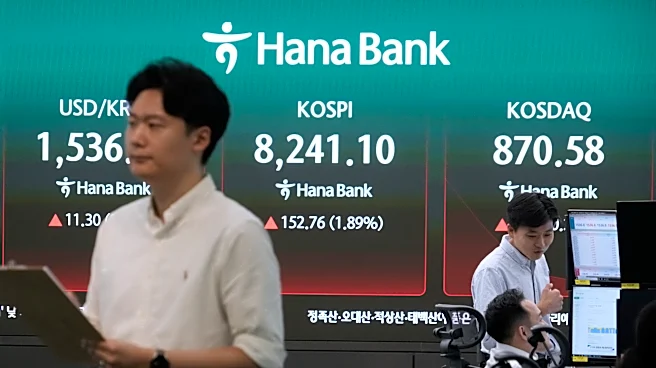
The U.S. dollar experienced a modest rise following a series of slight declines, while the Japanese yen remained near a 40-year low. This movement in currency values comes amid investor concerns over potential intervention by Japanese authorities to support
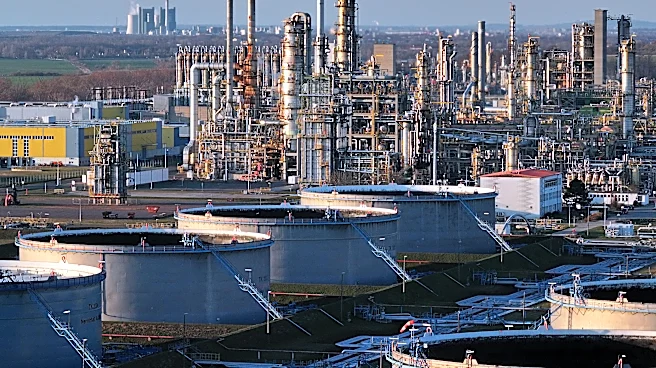
the yen. Additionally, geopolitical tensions have escalated with reports of Iran firing missiles at ships in the Strait of Hormuz, impacting oil prices. U.S. crude oil prices rose by 2.8% to $70.47 per barrel, and Brent crude increased by 3% to $74.15 per barrel due to fears of supply disruptions. Meanwhile, the U.S. Commerce Department reported a significant increase in the trade deficit, which jumped 42.2% to $77.6 billion, driven by a surge in AI-related capital goods imports.
Why It's Important?
The rise in the U.S. dollar and the increase in the trade deficit have significant implications for the U.S. economy and global markets. A stronger dollar can affect U.S. exports by making them more expensive for foreign buyers, potentially impacting trade balances further. The increased trade deficit highlights the growing demand for capital goods, particularly in the AI sector, which could signal shifts in economic priorities and investment patterns. Additionally, the geopolitical tensions in the Strait of Hormuz could lead to further volatility in oil prices, affecting energy markets and economic stability. These developments are crucial for policymakers and investors as they navigate the complex interplay of currency values, trade dynamics, and geopolitical risks.
What's Next?
Investors and policymakers will closely monitor the Federal Reserve's upcoming meeting minutes for insights into future monetary policy directions. The recent underwhelming U.S. jobs report has led to a decrease in expectations for further rate hikes this year, which could influence market strategies and economic forecasts. Additionally, any potential intervention by Japanese authorities to support the yen could have ripple effects across global currency markets. The ongoing geopolitical tensions in the Middle East will also be a focal point, as further escalations could disrupt oil supplies and impact global economic stability.