




What's Happening?
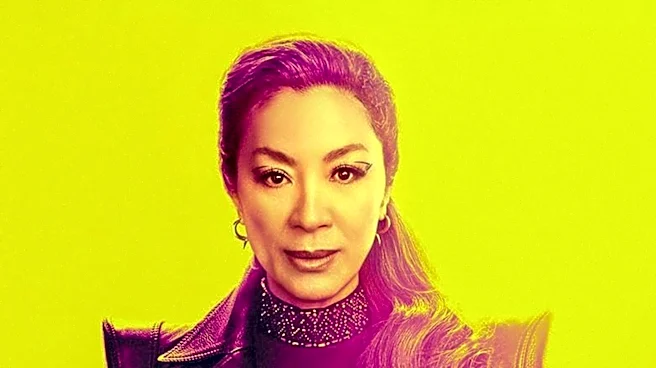
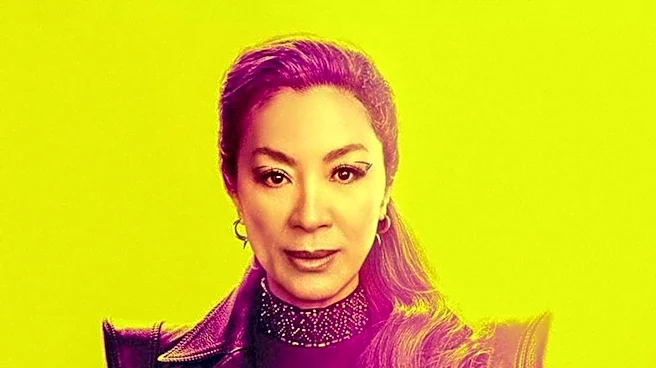
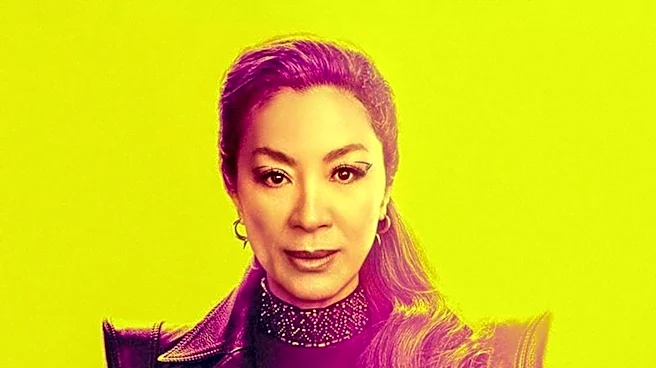
Award-winning actress Michelle Yeoh is starring in the new Prime Video series 'Blade Runner 2099,' a sequel set 80 years after the original 1982 film. In this dystopian future, Replicants, artificial humanoids, have become the dominant population, while
humans are relegated to second-class status. Yeoh portrays Olwen, a Replicant nearing the end of her life who requires assistance for her final mission as a Blade Runner. Her character reunites with Cora, a human who is pretending to be a Replicant. Yeoh, a long-time fan of the original 'Blade Runner' film, promoted the show in the Philippines, where she discussed the themes of humanity and desire explored in the series. She highlighted the character of Roy Batty from the original film, describing him as a 'misunderstood hero' who exhibited more humanity than his human counterpart, Rick Deckard, during the iconic 'tears in the rain' sequence. Yeoh emphasized the series' exploration of whether humanity is innate or learned through life experiences.
Why It's Important?
Michelle Yeoh's involvement in 'Blade Runner 2099' brings significant star power to a franchise known for its philosophical depth and visual innovation. Her role as a Replicant Blade Runner allows the series to delve into complex questions about artificial intelligence, consciousness, and what it means to be human, themes that resonate deeply in contemporary society with advancements in AI and robotics. The series' premise, where Replicants are dominant and humans are marginalized, offers a compelling reversal of traditional power dynamics, prompting viewers to reconsider societal structures and prejudices. Yeoh's interpretation of characters like Roy Batty as 'misunderstood heroes' encourages a more nuanced understanding of antagonists and the ethical implications of creating sentient beings. This narrative approach can spark broader discussions about the future of technology, ethics in AI development, and the evolving definition of humanity, impacting public perception and potentially influencing future technological and ethical debates.
What's Next?
All eight episodes of 'Blade Runner 2099' are currently streaming on Prime Video, allowing audiences to engage with the series' themes and narrative. The show's exploration of humanity, desire, and the roles of Replicants and humans is likely to generate continued discussion among viewers and critics. The success and reception of 'Blade Runner 2099' could influence future productions within the science fiction genre, particularly those that tackle complex ethical questions surrounding artificial intelligence and dystopian futures. The series may also contribute to ongoing conversations about representation in media, given Yeoh's prominent role and her advocacy for Asian actors in the entertainment industry. Future seasons or spin-offs could further expand on the universe and its philosophical inquiries, depending on audience engagement and critical acclaim.
Beyond the Headlines
The 'Blade Runner' franchise, including 'Blade Runner 2099,' consistently explores profound ethical and philosophical questions that extend beyond typical science fiction narratives. The series' central inquiry into whether humanity is an inherent quality or a learned experience challenges conventional understandings of consciousness and identity. By portraying Replicants as capable of profound emotions and desires, and even as dominant, the show prompts a re-evaluation of what constitutes 'life' and 'personhood.' This has deeper implications for legal and ethical frameworks surrounding artificial intelligence, particularly as AI technology advances. The narrative also subtly critiques societal power structures and the potential for prejudice, regardless of who holds the power. The idea of 'living life to the fullest' despite a predetermined expiration, as articulated by Yeoh regarding her character Olwen, offers a poignant reflection on mortality and purpose, themes that resonate universally and transcend the science fiction setting.