




What's Happening?
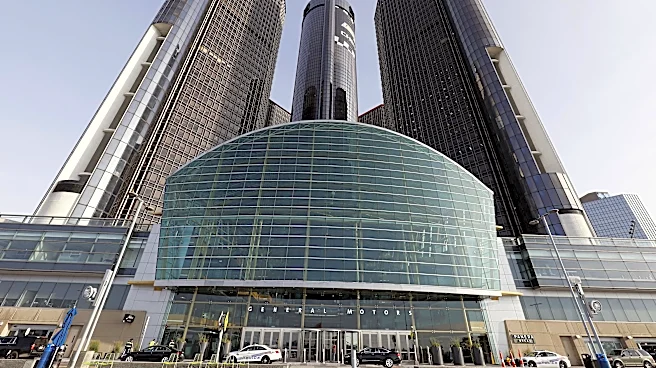
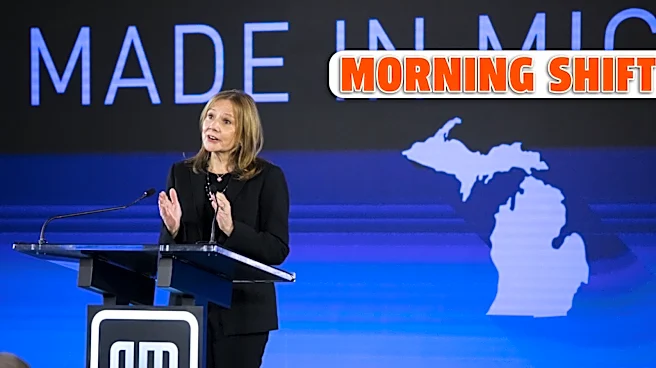
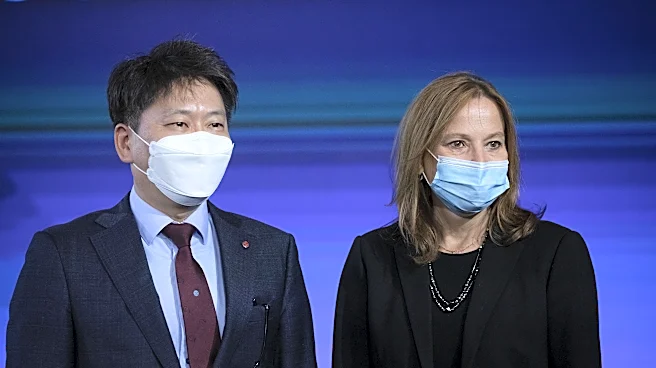
General Motors (GM) is actively engaged in succession planning for its CEO, Mary Barra, a process overseen by Patricia Russo, GM's longest-serving board member and independent lead director. According to the company's annual proxy filing, this planning occurs
at least annually. The process involves Barra providing the board with recommendations and evaluations of potential successors, along with discussions on their developmental plans. Board members also engage directly with CEO candidates and senior management talent in various forums to personally assess them. Former GM CEO and Chairman Dan Akerson, who recommended Barra for the role in 2013, noted the difficulty in finding her replacement, citing her success as the first female CEO of a major automaker and the complex challenges facing the industry, such as artificial intelligence, vehicle digitalization, and the rise of China and autonomous vehicles. While Akerson declined to name potential internal candidates, he emphasized the need for a dynamic successor, adaptable if from outside the company. A recent Wall Street Journal report indicated GM is working with an executive search firm to identify external candidates in addition to internal prospects.
Why It's Important?
The succession planning for Mary Barra at General Motors is significant due to her impactful tenure and the transformative period the automotive industry is undergoing. Barra has led GM since January 2014, navigating the company through significant technological shifts and market changes. Her replacement will inherit a company at the forefront of electric vehicle development, autonomous driving technology, and intense global competition, particularly from China. The selection of a new CEO will dictate GM's strategic direction in these critical areas, influencing its competitiveness and market position. The decision to potentially look for external candidates, as reported, marks a departure from the industry norm where major automakers typically promote from within, suggesting the board may be seeking specific expertise or a fresh perspective to tackle future challenges. This choice could either inject new dynamism into GM or introduce risks associated with an outsider adapting to the company's culture and complex operations. The outcome will have broad implications for GM's workforce, shareholders, and the broader automotive sector.
What's Next?
The succession planning process at General Motors will continue with ongoing evaluations of both internal and external candidates. The board, led by Patricia Russo, will likely intensify its assessment of potential successors, considering their leadership capabilities, technical expertise, and vision for the future of the automotive industry. Mary Barra will continue to play a role in this process by providing recommendations and evaluations to the board. The engagement with an executive search firm suggests a thorough and potentially lengthy search, indicating that a decision may not be imminent. Stakeholders, including investors and industry analysts, will closely monitor developments, looking for signals regarding the preferred profile of the next CEO. The eventual announcement of Barra's successor will likely be followed by a period of transition, during which the new leader will outline their strategic priorities and vision for GM's future in a rapidly evolving global market.
Beyond the Headlines
The succession at General Motors extends beyond a mere change in leadership; it reflects broader trends and challenges within the global automotive industry. The emphasis on finding a 'dynamic' leader capable of navigating artificial intelligence, vehicle digitalization, and the rise of China underscores the profound technological and geopolitical shifts impacting manufacturing. The potential consideration of an external candidate, while unusual for the auto sector, highlights a growing recognition that traditional industry experience alone may not suffice for future leadership. This could signal a broader trend where boards prioritize leaders with diverse backgrounds, particularly in technology or global strategy, over those with purely automotive pedigrees. Furthermore, the legacy of Mary Barra as the first female CEO of a major automaker sets a high bar, and her successor will face scrutiny not only on performance but also on their ability to continue fostering innovation and diversity within a historically male-dominated industry. The choice will ultimately shape GM's corporate culture and its ability to adapt to a future where vehicles are increasingly defined by software and connectivity.