







What's Happening?
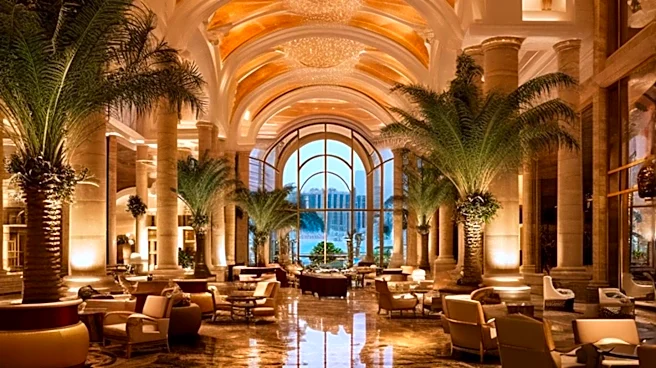
Jakarta's luxury hotels, including The St. Regis Jakarta and The Ritz-Carlton Jakarta, Pacific Place, are expanding their meetings and event offerings despite a weaker market. These hotels are betting on premium experiences rather than discounts to capture
business, as international events and government spending remain subdued. According to a Colliers report, occupancy across Jakarta's upper-tier hotels is expected to remain between 57% to 60% this year, with average room rates staying at $63 to $70, below 2024 levels. The MICE (meetings, incentives, conferences, and exhibitions) segment is forecasted to remain soft through at least mid-year. Both hotels are focusing on higher-value events, maintaining rate discipline, and building pricing around the overall experience rather than offering discounts.
Why It's Important?
The strategy adopted by Jakarta's luxury hotels highlights a shift in the hospitality industry towards value over volume. By focusing on premium experiences, these hotels aim to protect their margins in a competitive market. This approach is significant as it reflects a broader trend in the industry where operators are moving away from pursuing occupancy to protecting margins. The focus on high-value events could potentially attract a more affluent clientele, thereby stabilizing revenue streams. Additionally, the global MICE market is projected to grow significantly, with Asia expected to account for a substantial portion of this growth. This positions Jakarta's luxury hotels to benefit from long-term industry expansion.
What's Next?
As Jakarta's luxury hotel market becomes increasingly competitive, with more premium properties set to open through 2028, existing hotels are likely to continue refining their strategies to maintain a competitive edge. The focus on creating differentiated experiences and maintaining pricing discipline is expected to continue. Additionally, the hotels are positioning themselves to benefit from longer-term industry growth, with a need for a balanced mix of domestic and international clientele to sustain the MICE segment. This strategic positioning could lead to increased collaboration with multinational companies and regional meetings, further boosting the market.