







What's Happening?
The Coastal Shores and Spores Mycological Society, a mushroom club based in Grays Harbor County, has partnered with Grays Harbor College to host its monthly public meetings on the college's Aberdeen campus. Founded in 2024 by Corinne Srsen, the club initially
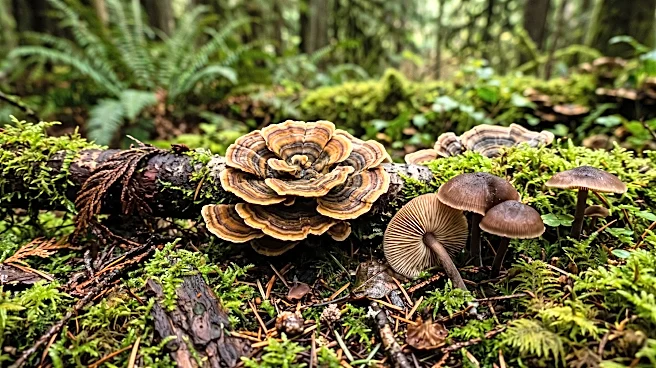
struggled with attendance at the Ocean Shores Public Library. Since moving to the college, attendance has significantly increased, with the first meeting at the new location drawing over 80 guests compared to 10 at the previous venue. The club is also enhancing its meeting format to be more interactive, offering experiences such as wild mushroom tastings, mushroom pigment painting, and hands-on learning with microscopes to view spores. The upcoming November meeting will feature Jordan Amacher, a Quinault tribal member and traditional plant medicine maker, who will demonstrate how to create alcohol-free glycerites using Turkey Tail mushrooms and Devil's Club plant.
Why It's Important?
This partnership signifies a growing public interest in mycology and traditional plant medicine within the U.S., particularly in the Pacific Northwest. The increased attendance at the club's meetings at Grays Harbor College demonstrates a demand for accessible, interactive educational opportunities outside traditional academic settings. For Grays Harbor College, hosting such events enriches its community engagement and provides unique learning experiences that blend scientific inquiry with cultural knowledge. The inclusion of Jordan Amacher, a Quinault tribal member, highlights the importance of incorporating indigenous perspectives and traditional practices into contemporary discussions about natural resources and wellness, fostering a more holistic understanding of mycology and ethnobotany.
What's Next?
The Coastal Shores and Spores Mycological Society plans to continue its quarterly public meetings at Grays Harbor College, with future dates to be announced. These meetings will maintain their interactive format, offering diverse educational experiences. Paid memberships will provide additional benefits, including members-only potlucks, camp-outs, and guided forays for wild mushroom identification and collection. The collaboration with Grays Harbor College is expected to further boost membership and community involvement, potentially leading to expanded programs or research initiatives related to local fungal diversity. The club's success could also inspire similar partnerships between educational institutions and community-based organizations across the U.S. interested in natural sciences.
Beyond the Headlines
The collaboration between the Coastal Shores and Spores Mycological Society and Grays Harbor College reflects a broader societal shift towards experiential learning and a renewed interest in local ecosystems and traditional knowledge. The emphasis on hands-on activities, such as making glycerites and using microscopes, moves beyond passive learning, encouraging direct engagement with the natural world. Furthermore, the involvement of a Quinault tribal member like Jordan Amacher underscores the critical role of indigenous communities in preserving and sharing knowledge about plant and fungal medicines. This initiative not only educates the public about mushrooms but also promotes cultural exchange and respect for diverse healing traditions, potentially influencing local conservation efforts and educational curricula.