






What's Happening?
The Backrooms, a fictional setting originating from the internet, is gaining significant attention as it transitions from an online myth to a mainstream cultural phenomenon. Initially emerging on 4chan in 2019, the Backrooms are depicted as an endless
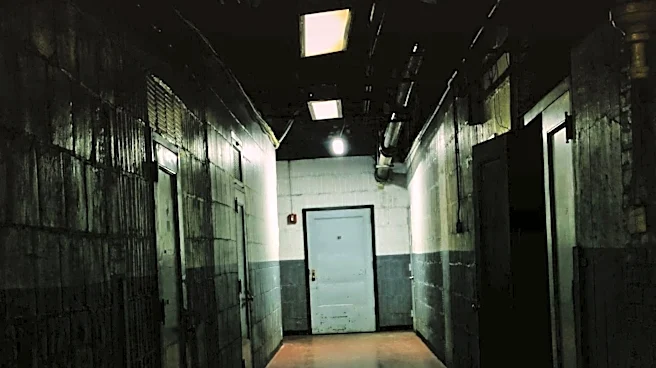
maze of empty, fluorescent-lit rooms, symbolizing a hidden dimension where individuals might accidentally find themselves. This concept has expanded across various platforms like Reddit, TikTok, and YouTube, where users contribute to its mythology through eerie images and stories. Filmmaker Kane Parsons has played a pivotal role in popularizing the Backrooms with his viral 'found footage' videos on YouTube, and he is now adapting the concept into a feature-length horror thriller. The Backrooms have become a participatory experience, with users creating maps, fictional diary entries, and survival guides, transforming it into a unique form of online legend-tripping.
Why It's Important?
The rise of the Backrooms highlights a shift in consumer interest towards participatory and immersive experiences in horror and trauma-related spaces. Unlike traditional horror narratives, the Backrooms invite audiences to actively engage in world-building, blurring the lines between storytelling and participation. This phenomenon reflects a broader trend in digital culture where users seek out and contribute to collectively imagined environments. The Backrooms' popularity underscores the evolving nature of online engagement, where digital spaces become meaningful cultural environments. This trend could influence future content creation, emphasizing interactive and user-driven narratives over passive consumption. The Backrooms also illustrate how digital culture is reshaping traditional tourism experiences, offering a new form of 'dark tourism' that exists entirely online.
What's Next?
As the Backrooms continue to gain traction, they are likely to inspire further adaptations and expansions across various media. The upcoming feature-length film by Kane Parsons could introduce the concept to a wider audience, potentially leading to increased interest and participation in the Backrooms' mythology. Additionally, the phenomenon may encourage other creators to explore similar participatory and immersive storytelling methods, further blurring the boundaries between digital and physical experiences. The Backrooms' success could also prompt discussions about the role of digital spaces in shaping cultural narratives and the potential for online environments to become significant cultural touchstones.
Beyond the Headlines
The Backrooms phenomenon raises intriguing questions about the nature of reality and the human fascination with the uncanny. By creating a space that feels both familiar and unsettling, the Backrooms tap into deep-seated psychological and cultural themes. This interest in the uncanny and the liminal reflects broader societal anxieties and the desire to explore the unknown. The Backrooms also challenge traditional notions of space and place, suggesting that digital environments can hold as much emotional and cultural significance as physical locations. This development could have long-term implications for how we understand and interact with digital spaces, potentially leading to new forms of cultural expression and engagement.