







What's Happening?
Bitcoin and Ethereum are experiencing a slide in value, with Bitcoin trading near $76,000 and Ethereum hovering around $2,240. This downturn is attributed to a confluence of factors, including macroeconomic pressures, a strengthening U.S. dollar, weakness
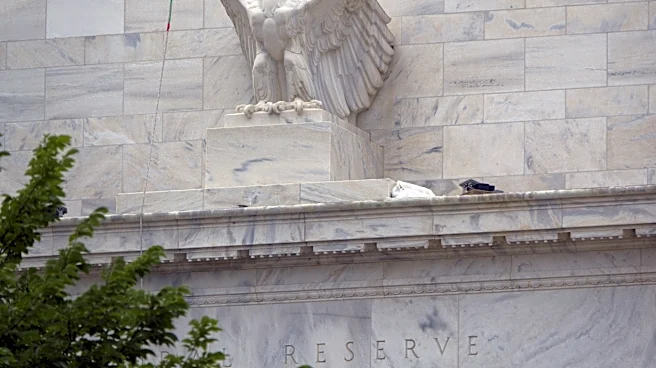
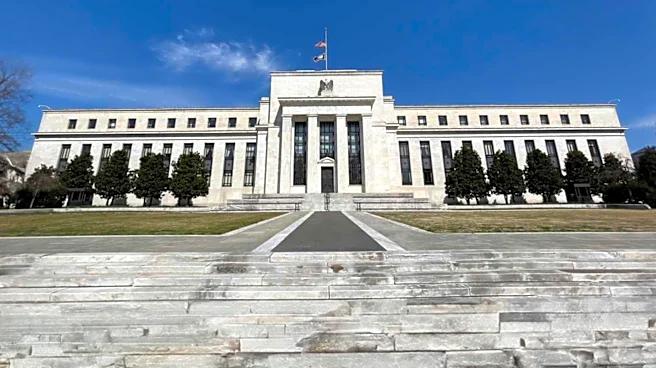
in technology stocks, and growing regulatory uncertainty in the cryptocurrency space. A stronger-than-expected U.S. employment report, showing 165,000 jobs added in October and a drop in unemployment to 4.1%, has led markets to anticipate a higher probability of a Federal Reserve rate increase. Higher interest rates typically make volatile assets like cryptocurrencies less attractive. The U.S. dollar's rebound further pressures crypto, as these assets are primarily priced in dollars, making them more expensive for international buyers. Regulatory uncertainty regarding future legislation and enforcement priorities also contributes to investors reducing their exposure to digital assets.
Why It's Important?
This decline highlights the increasing interconnectedness of the cryptocurrency market with traditional financial systems and macroeconomic indicators. The sensitivity of Bitcoin and Ethereum to interest rates, dollar strength, and broader risk appetite demonstrates that digital assets do not operate in isolation. Higher interest rates can divert capital from speculative investments, while a strong dollar makes crypto less accessible globally. Regulatory uncertainty creates an environment of caution, potentially hindering institutional adoption and innovation within the crypto sector. The underperformance of Ethereum relative to Bitcoin suggests that traders may be favoring perceived defensiveness and liquidity over higher-beta crypto exposure, indicating a shift in risk appetite among investors. This period of pressure tests the resilience of the crypto market against external economic forces.
What's Next?
Traders and investors will be closely monitoring upcoming inflation readings, Treasury yields, the dollar index, and Federal Reserve communications for further clues on monetary policy. Developments in digital-asset legislation will also be crucial in shaping market sentiment. Bitcoin's ability to hold the $76,000 level and Ethereum's performance near $2,240, especially relative to Bitcoin, will serve as key short-term sentiment signals. If Ethereum continues to underperform, it could indicate a sustained preference for Bitcoin's perceived stability. Market breadth and derivatives data, such as open interest and funding rates, will provide additional context on whether the market is undergoing an orderly pullback or a more aggressive risk-off event. The regulatory landscape remains a significant unknown, with potential for either restrictive or constructive frameworks that will impact future market dynamics.
Beyond the Headlines
The current market conditions underscore a fundamental challenge for cryptocurrencies: balancing their promise of decentralization and independence with their growing integration into the global financial system. As crypto assets become more mainstream, they inevitably become subject to the same macroeconomic forces that influence traditional markets. This period of pressure could force a re-evaluation of investment theses, moving beyond narratives of pure decentralization to incorporate broader economic realities. The regulatory uncertainty also points to a critical juncture where governments are grappling with how to classify and oversee digital assets, which will have long-term implications for innovation, investor protection, and market structure. The market's reaction to these pressures will shape the perception of cryptocurrencies as a mature asset class capable of weathering economic headwinds.