
What's Happening?
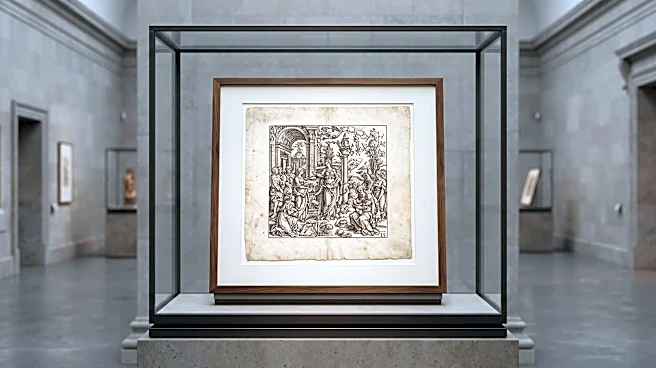
The Albertina Museum in Vienna is celebrating the 250th anniversary of the establishment of its art collection. The collection began on July 4, 1776, when Duke Albert of Saxe-Teschen and his wife Maria
Christina acquired their first artworks. Initially, this included a portfolio of engravings. Over the decades, the couple amassed a comprehensive collection of graphic works from the early Renaissance onward, featuring masterpieces by artists such as Albrecht Dürer and Leonardo da Vinci. By the time of Duke Albert's death in 1822, the collection comprised 200,000 prints and 14,000 drawings. The collection remained with the Habsburg family and later became the property of the Republic of Austria in 1919. Today, the Albertina Museum houses over one million objects, including works on paper, paintings, sculptures, and photography.
Why It's Important?
The 250th anniversary of the Albertina Museum's collection highlights the enduring legacy of art patronage and the continuous evolution of cultural institutions. The collection's growth from a private acquisition to a public museum with over a million objects underscores the importance of preserving and making art accessible. The museum's ability to adapt and expand its holdings, even after significant political changes like the end of the Habsburg dynasty, demonstrates the resilience and adaptability of cultural heritage institutions. For the U.S., this celebration serves as a reminder of the value of historical preservation and the role of museums in shaping national identity and fostering international cultural exchange, particularly as American institutions also grapple with their own histories and futures.
What's Next?
According to the Albertina's director general, Ralph Gleis, the 250th anniversary offers an opportunity to look both backward and forward, celebrating the past while considering the future. This suggests that the museum will likely engage in special exhibitions, educational programs, and possibly new acquisitions to mark this milestone. The celebration could also involve international collaborations, further solidifying the museum's global standing. Such events often attract significant tourism and academic interest, contributing to the cultural dialogue surrounding art history and museum studies.
Beyond the Headlines
The Albertina's journey from a private collection to a public institution reflects broader shifts in the ownership and accessibility of art. The collection's growth, influenced by historical events like the French Revolution and Napoleonic Wars which dispersed other high-calibre holdings, illustrates how geopolitical changes can impact cultural landscapes. The museum's continued expansion beyond works on paper to include other media signifies a dynamic approach to art curation, adapting to changing artistic practices and public interests. This evolution raises questions about the definition of a 'museum' in the 21st century and its role in reflecting diverse artistic expressions.