



What's Happening?
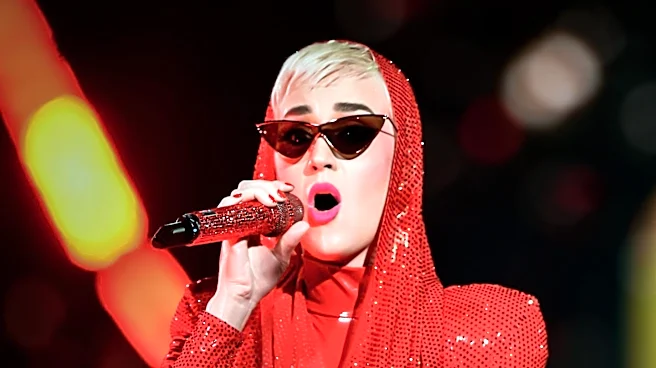
The 2015 Super Bowl halftime show, headlined by pop superstar Katy Perry, remains a significant cultural touchstone, largely due to the unexpected viral fame of 'Left Shark.' Bryan Gaw, one of the two shark dancers, gained widespread attention for his
seemingly uncoordinated performance, which he later revealed was an intentional freestyle. This moment became a prominent internet meme and even inspired Halloween costumes in the year of its occurrence. Gaw, who had been dancing with Perry since 2010, initially kept his identity as Left Shark private, only revealing it publicly in 2018 after the intensity of the meme had subsided. The performance, viewed by an audience of approximately 118 million people, solidified Left Shark's place in pop culture history, demonstrating how unexpected elements can capture public imagination during major televised events.
Why It's Important?
The enduring legacy of 'Left Shark' from the 2015 Super Bowl halftime show highlights the profound impact of live televised events on pop culture and the internet. This incident illustrates how a single, unplanned moment can transcend its original context to become a widespread meme, influencing everything from social media trends to consumer behavior, such as Halloween costume choices. It underscores the power of viral content to shape public discourse and create lasting cultural references, even years after the initial event. For artists and performers, it demonstrates the unpredictable nature of live performances and how elements outside of the main act can sometimes overshadow the intended spectacle, creating a unique form of engagement with the audience. The phenomenon also showcases the internet's ability to immortalize and recontextualize moments, giving them a life far beyond their original broadcast.
What's Next?
The continued reference to 'Left Shark' suggests that future Super Bowl halftime shows will likely be scrutinized not only for their main performances but also for any unexpected or quirky elements that could go viral. Performers and choreographers might increasingly consider how their acts could be interpreted or meme-ified by online audiences, potentially leading to more deliberate attempts to create memorable, shareable moments, or conversely, more tightly controlled performances to avoid unintended viral incidents. The influence of past halftime shows on pop culture, as seen with 'Left Shark' inspiring Halloween costumes, indicates that these performances will continue to be a source of inspiration for trends and cultural phenomena. This trend is further evidenced by recent reports of Halloween costume searches spiking due to 2026 pop culture events, including a Super Bowl halftime show performance, reinforcing the ongoing cultural impact of these highly visible events.
Beyond the Headlines
The 'Left Shark' phenomenon delves into deeper implications regarding authenticity versus performance in the age of mass media and internet culture. Bryan Gaw's revelation that his 'awkward' dancing was a deliberate freestyle challenges the audience's initial perception of a mistake, highlighting the subjective nature of interpretation in viral content. This incident raises questions about the role of intentionality in creating cultural moments and how audiences engage with perceived imperfections. It also touches upon the transient nature of internet fame and the personal impact on individuals thrust into the spotlight, as Gaw chose to step away from the immediate attention. Furthermore, it underscores the commercial potential of viral moments, as 'Left Shark' quickly became a marketable image, demonstrating how cultural phenomena can be rapidly commodified. The story serves as a case study in how a seemingly minor detail in a major event can spark widespread discussion and become a lasting symbol.