







What's Happening?
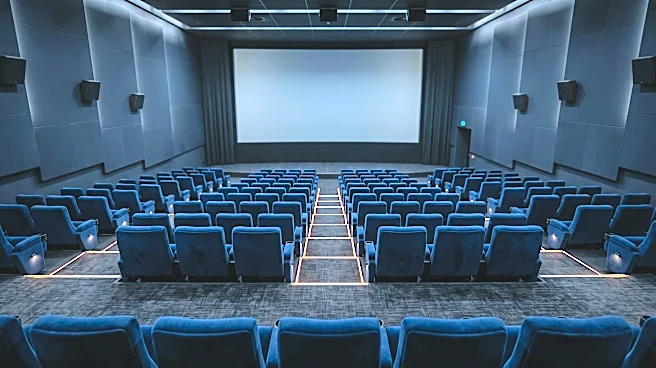
Screenvision, a major movie-ad company, is launching a new pre-show experience in October, moving away from traditional puzzles and behind-the-scenes formats. The revamped pre-show will feature content blocks dedicated to topics like food, sports, and fashion,
aiming to appeal to Gen Z, which constitutes 50% of their audience. Geoff Schiller, Screenvision's new CEO, stated that Gen Z desires content that reflects their interests, not just quizzes. The initiative, named 'Front and Center,' will include video content from partners such as Eater, Complex, and NowThis. This strategic shift is driven by projections of increased movie theater attendance and advertising revenue, with PwC forecasting cinema advertising to reach $2.7 billion by 2030. The new pre-show will still include commercials but is designed to be an entertaining show with advertising, rather than just a series of ads.
Why It's Important?
This move is significant for the U.S. entertainment and advertising industries, as it directly addresses the evolving preferences of Gen Z, a crucial demographic for future revenue. By tailoring pre-show content to resonate with younger audiences, Screenvision aims to capture a larger share of advertising dollars and enhance the overall movie-going experience. This strategy acknowledges that traditional advertising methods may not be effective with Gen Z, who are accustomed to personalized and engaging digital content. The success of this initiative could influence how other media platforms and advertisers approach content creation and placement for younger demographics. It also highlights the continued importance of the cinema experience as a valuable platform for reaching engaged consumers, despite the rise of streaming services.
What's Next?
Following a soft launch, Screenvision's 'Front and Center' pre-show will expand to more theaters by the holiday season. The company plans to continuously evaluate audience engagement and advertiser interest to refine its content strategy. Screenvision also intends to explore additional avenues for advertiser engagement, such as 'watch party' concepts for live events and opportunities for product sampling in theaters. The success of this revamped pre-show could lead to similar content-driven advertising models being adopted across various entertainment venues. Advertisers will likely monitor the effectiveness of these new content blocks in reaching Gen Z, potentially shifting their budgets towards more integrated and engaging cinema advertising formats. The initiative could also spur further collaboration between media companies and content creators to produce tailored experiences for specific audiences.
Beyond the Headlines
Screenvision's pre-show revamp reflects a deeper understanding of Gen Z's media consumption habits and their demand for authentic, relevant content. This generation, having grown up with on-demand streaming and personalized feeds, expects more than passive entertainment. By integrating engaging content into the pre-show, Screenvision is attempting to transform a traditionally overlooked segment of the cinema experience into a valuable touchpoint. This strategy also speaks to the broader challenge faced by traditional media in retaining and attracting younger audiences in a fragmented media landscape. Ethically, it raises questions about the blurring lines between entertainment and advertising, and how content creators can maintain integrity while catering to commercial interests. Ultimately, this initiative is a testament to the ongoing evolution of advertising, where engagement and value proposition are becoming as important as reach and frequency, especially when targeting a media-savvy generation like Gen Z.