






What's Happening?
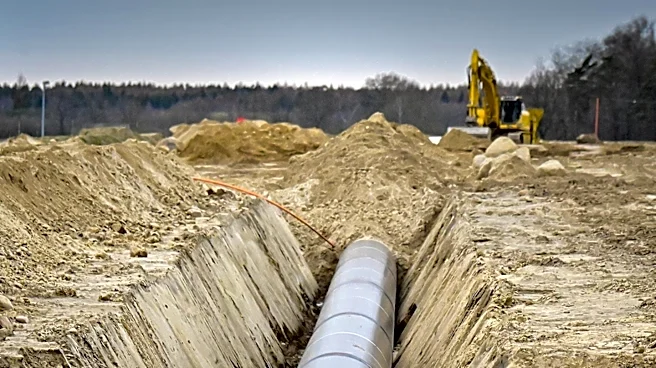
The proposed Dakota Mainstem Regional Water System in eastern South Dakota is estimated to cost between $8.4 billion and $10 billion. This pipeline aims to deliver Missouri River water to nearly 60 providers across South Dakota and neighboring states.
The project is driven by increasing industrial and population demands. A $4.2 million feasibility study is underway, with federal legislation potentially providing funding support. The project is part of a broader initiative to expand water infrastructure in the region.
Why It's Important?
The development of this water pipeline is crucial for supporting the region's growth and addressing water scarcity issues. As industries and populations expand, the demand for reliable water sources increases, making infrastructure projects like this essential. The pipeline's construction could stimulate economic growth by enabling new developments and ensuring water security. However, the high cost and complexity of the project pose challenges, requiring careful planning and collaboration among stakeholders.
What's Next?
The feasibility study will take approximately two and a half years to complete, providing detailed insights into the project's viability. Pending federal support, construction could begin, with significant implications for regional development. Stakeholders will need to address environmental concerns and ensure sustainable water management practices. The project's progress will be monitored closely, as it could serve as a model for similar initiatives in other regions facing water scarcity.