







What's Happening?
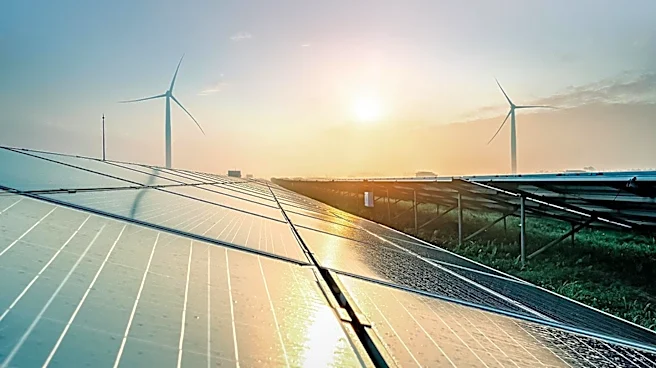
The development of future solar technologies, particularly perovskite-silicon tandem panels, is set to revolutionize the solar energy industry. These panels combine a traditional silicon cell with a thin layer of perovskite, allowing them to absorb more
solar energy than conventional silicon panels. Laboratory tests have shown these panels can achieve efficiencies exceeding 34.5%, significantly higher than current commercial silicon panels. This advancement means that homeowners and businesses could generate 20-30% more energy from the same rooftop area without needing additional panels. The potential for these panels to be integrated into existing silicon production lines without the need for new manufacturing infrastructure further enhances their appeal.
Why It's Important?
The introduction of more efficient solar panels could have a substantial impact on the U.S. energy market. By increasing the energy output from solar installations, these panels could help reduce electricity costs for consumers and decrease reliance on fossil fuels. This aligns with broader efforts to transition to cleaner energy sources and reduce carbon emissions. The ability to retrofit existing production lines for these new panels could also lower manufacturing costs, making solar energy more accessible and affordable. This technological advancement supports the U.S. goal of expanding renewable energy use and could drive significant growth in the solar industry.
What's Next?
As these advanced solar panels move closer to commercial availability, stakeholders in the energy sector, including manufacturers, policymakers, and consumers, will need to prepare for their integration into the market. Manufacturers may begin adjusting their production processes to accommodate the new technology, while policymakers could consider incentives to encourage adoption. Consumers, both residential and commercial, may start evaluating the potential cost savings and environmental benefits of upgrading to these more efficient panels. The transition to these advanced solar technologies could also prompt further research and development in the field, potentially leading to even greater efficiencies and innovations in renewable energy.