


What's Happening?
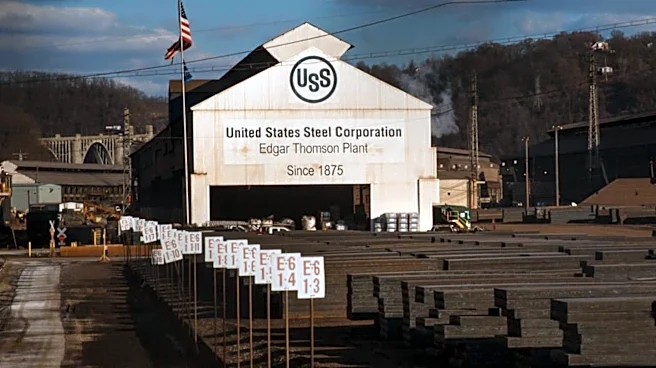
Residents of Gary, Indiana, and representatives from the city and U.S. Steel convened to discuss a proposed economic development agreement centered on a $3 billion investment at the Gary Works facility. The agreement aims to modernize the plant, secure
long-term revenue for city schools and infrastructure without raising taxes, and improve environmental performance. Dennis Otten, an attorney representing U.S. Steel, highlighted planned investments including a new walking beam furnace to cut emissions, new technology at blast furnace #14 to decrease sulfur dioxide emissions, and a new baghouse for the recycling plant to control emissions. The deal includes approximately $195 million in plant investments, with a potential for a second phase of investment. While city officials and U.S. Steel express optimism about the deal's benefits, some residents and environmental activists, including those from Gary Advocates for Responsible Development (GARD) and Just Transition Northwest Indiana (JTNWI), voiced concerns about the environmental impact and the structure of the Tax Increment Financing (TIF) district. They advocate for cleaner technologies, such as direct reduction, which U.S. Steel states would require building a new electric arc furnace-based facility from the ground up.
Why It's Important?
This economic development agreement is crucial for Gary, Indiana, as it seeks to revitalize its economy and address long-standing infrastructure and public safety needs. The proposed $3 billion investment by U.S. Steel, particularly the $1.2 billion expected to be taxable, could generate significant property tax and TIF revenues over the next 25 years, potentially providing $247 million. This influx of funds is intended to support public safety, education, and infrastructure, offering a pathway to financial stability for the city. However, the debate surrounding the TIF district and environmental concerns highlights the complex balance between economic growth and community well-being. The push for cleaner technologies by activists underscores a broader national trend towards environmental responsibility in industrial operations, which could influence future regulatory frameworks and corporate investment strategies in heavy industries across the U.S. The outcome of the Gary Common Council's vote on December 1 will set a precedent for how industrial cities negotiate with major corporations to achieve both economic development and environmental sustainability.
What's Next?
The Gary Common Council is scheduled to vote on the economic development agreement on December 1. If approved, the initial phase of investments, estimated at $100 million, will proceed, focusing on modernizing the Gary Works plant and implementing environmental improvements. There is also potential for a second phase of investment, which U.S. Steel anticipates would generate significantly more TIF revenues. City officials will continue to work with U.S. Steel and community organizations to ensure environmental quality and strengthen protections for residents. Local activists are expected to continue advocating for the adoption of direct reduction technologies and other cleaner investments. The implementation of the agreement will be closely watched by other industrial cities facing similar challenges of economic development and environmental stewardship.
Beyond the Headlines
The U.S. Steel deal in Gary reflects a national challenge for older industrial cities: how to leverage existing industries for economic growth while simultaneously addressing historical environmental burdens and transitioning towards more sustainable practices. The tension between immediate economic benefits and long-term environmental health is a recurring theme in such negotiations. The discussion around direct reduction technologies versus traditional blast furnaces highlights the technological evolution within the steel industry and the pressure on companies to adopt greener production methods. This case could serve as a model or a cautionary tale for other communities and industries grappling with similar issues, influencing how future industrial development agreements are structured to balance economic prosperity, environmental protection, and community engagement. The involvement of local activists also underscores the increasing power of community voices in shaping corporate and municipal decisions regarding industrial operations.