





What's Happening?
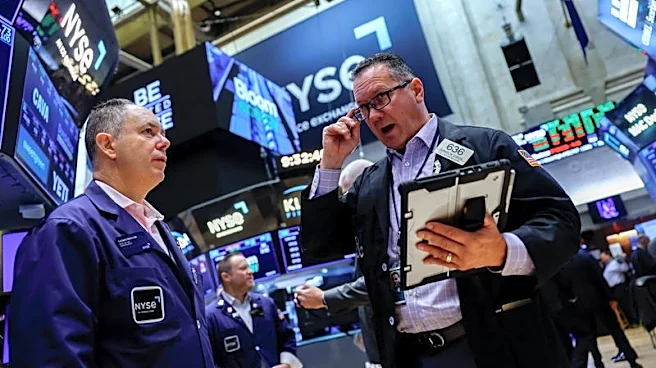
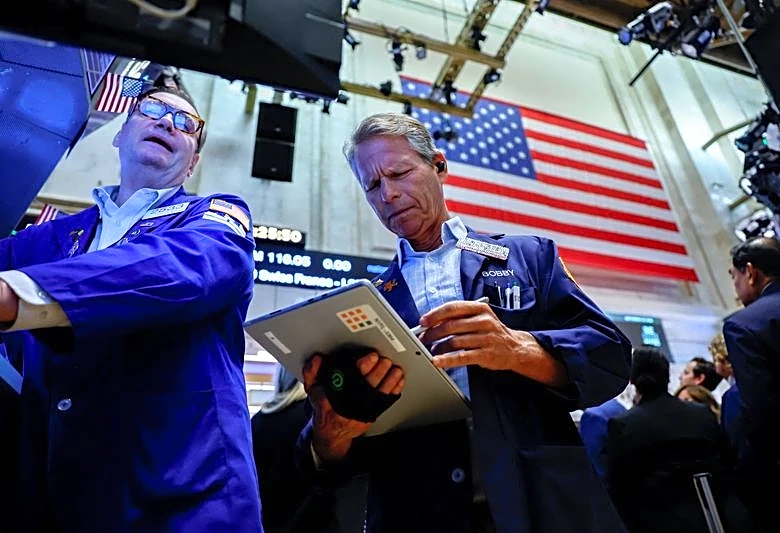
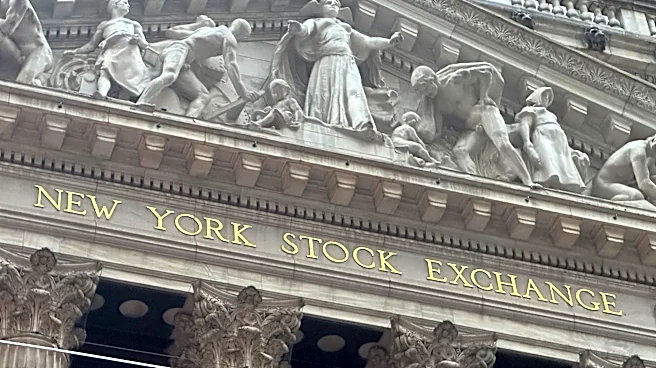
U.S. stocks surged, bringing the S&P 500 index within 0.3% of its all-time high, while the Nasdaq composite set a new record. This market rally was primarily fueled by several significant buyout announcements. PTC saw a 33.5% jump after Schneider Electric
of France announced a $22.6 billion acquisition deal. Similarly, RXO climbed 22.5% following C.H. Robinson Worldwide's offer to buy its truck brokerage business. Both acquiring companies cited the potential of artificial intelligence (AI) technology as a key driver for their deals, leading to strong performance across the AI sector. Nvidia, a major player in AI chips, gained 2.1%, significantly contributing to the S&P 500's rise. The market's performance comes ahead of the latest earnings reporting season, with analysts forecasting nearly 30% profit growth for S&P 500 companies from July through September, marking the third consecutive quarter of growth above 25%.
Why It's Important?
The near-record performance of U.S. stocks, particularly the Nasdaq's new high, signals robust investor confidence despite ongoing economic concerns. The influence of AI technology on major corporate acquisitions highlights its growing importance as a catalyst for business growth and market valuation. This trend indicates a significant shift in investment focus towards technology-driven sectors, potentially reshaping industry landscapes and corporate strategies. Strong earnings forecasts further underscore the resilience and profitability of U.S. companies, which can attract more capital and stimulate economic expansion. However, the rising bond yields, nearing their highest level since 2002, suggest potential headwinds as higher borrowing costs could temper future economic activity and investment, creating a complex environment for policymakers and businesses.
What's Next?
The market is now awaiting the start of the latest earnings reporting season, which will provide further insights into corporate profitability and economic health. The Federal Reserve is widely expected to hike its main interest rate at least once more by year-end to combat inflation, which could impact market sentiment and borrowing costs. The continued strength of the U.S. economy, driven by business spending on AI data centers and consumer spending, will be closely watched. However, concerns about rising prices for services and materials, as indicated by the Institute for Supply Management report, could signal persistent inflationary pressures. Investors will also monitor global events, such as the oil market's volatility due to geopolitical tensions, which can influence energy prices and broader economic stability.
Beyond the Headlines
The current market dynamics reveal a deeper narrative about the transformative power of artificial intelligence and its role in shaping the future economy. The emphasis on AI in major buyout deals suggests that companies are strategically positioning themselves for long-term growth by integrating advanced technological capabilities. This could lead to increased innovation, productivity gains, and new market opportunities, but also raises questions about job displacement and the ethical implications of widespread AI adoption. The divergence between strong stock performance and rising bond yields also highlights the ongoing tension between growth expectations and inflationary pressures, reflecting a complex economic environment where traditional indicators may not fully capture underlying trends. This period could mark a significant inflection point in the U.S. economy, driven by technological advancement and evolving monetary policy.