









What's Happening?
The South Korean government anticipates collecting more than 50 trillion won (approximately 34 billion U.S. dollars) in additional tax revenue for 2026, surpassing its initial supplementary budget projections. The Ministry of Economy and Finance is expected
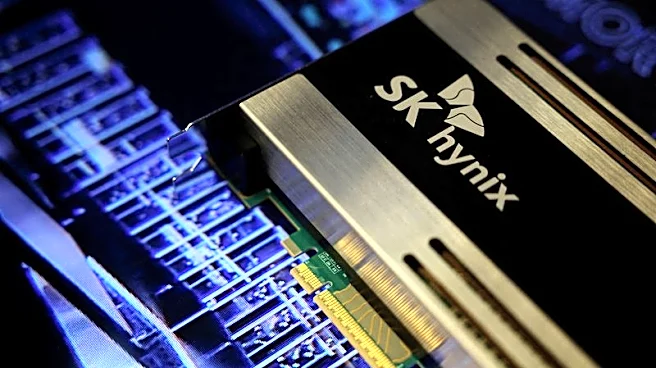
to release its revised 2026 tax revenue reestimate at the end of the current month. This updated figure is projected to exceed the April estimate of 415.4 trillion won by over 50 trillion won. If these projections hold, the annual tax revenue would reach over 465.4 trillion won, setting a new record and surpassing the previous high of 395.9 trillion won recorded in 2022. This significant increase is primarily attributed to higher-than-anticipated corporate tax payments from semiconductor companies, particularly Samsung Electronics and SK hynix, which reported combined operating profits of nearly 245 trillion won in the first half of the year.
Why It's Important?
This substantial increase in South Korea's tax revenue has significant implications for its economic stability and future fiscal planning. The unexpected windfall, largely driven by the robust performance of its semiconductor industry, highlights the critical role this sector plays in the nation's economy. For the U.S., this could signal continued strength in the global technology supply chain, particularly in semiconductors, which are vital for numerous American industries. A financially stronger South Korea could also be a more stable economic and strategic partner for the U.S. in the Indo-Pacific region. The additional revenue could bolster South Korea's ability to fund strategic initiatives, potentially including investments in technology, defense, or social programs, which could indirectly affect U.S. interests through trade and geopolitical alliances. The reliance on a single industry for such a significant portion of tax revenue also underscores potential vulnerabilities if the semiconductor market experiences a downturn.
What's Next?
The Ministry of Economy and Finance is scheduled to announce its official 2026 tax revenue reestimate at the end of this month. The increased tax revenue could lead to a significant boost in funding for the proposed Future Response Fund, which is planned for next year. This fund, intended as a financial reserve for periods of tax revenue shortfalls, could potentially exceed 200 trillion won. However, a decision on whether all of the additional revenue will be allocated to this fund is still pending. Planning and Budget Minister Park Hong-geun has previously stated the fund's purpose is to provide financial stability. The allocation of these funds will likely be a key focus of upcoming government discussions, potentially influencing future economic policies and investment priorities.
Beyond the Headlines
The surge in tax revenue, predominantly from the semiconductor sector, underscores a broader global trend of increasing reliance on advanced technology industries. This situation highlights the economic power concentrated within a few key technological giants and the potential for their performance to significantly impact national treasuries. While beneficial in the short term, it also raises questions about economic diversification and resilience. For the U.S., this could prompt further examination of its own domestic semiconductor production capabilities and supply chain security, especially given ongoing geopolitical tensions and the strategic importance of these components. The ethical implications of such concentrated wealth and its influence on national policy, as well as the potential for future market volatility to create fiscal challenges, are also deeper considerations.