



What's Happening?
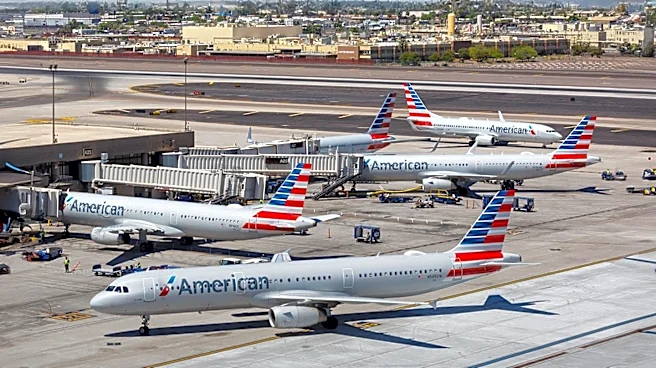
American Airlines is undertaking a significant $4 billion investment to expand Dallas/Fort Worth (DFW) Airport and overhaul its flight bank structure. The airline is transitioning from nine concentrated flight banks to thirteen smaller ones, a move designed
to more evenly distribute approximately 930 daily peak departures. This restructuring aims to reduce congestion and improve operational resilience, particularly during adverse weather conditions. As part of this expansion, Terminal F at DFW will be enlarged to include 31 gates. Early data, just two weeks after implementation, indicates improvements in on-time performance and baggage handling. The redesign maintains nearly all existing connections while reducing reliance on extremely tight layovers. American Airlines has also increased block time for flights and invested in ground equipment to manage aircraft when gates are unavailable, all with the goal of enhancing reliability for the 100,000 daily connecting passengers without compromising the hub's overall scale.
Why It's Important?
This substantial investment by American Airlines at DFW is critical for the U.S. aviation industry, particularly for a major hub like Dallas/Fort Worth. By reducing peak congestion and improving operational efficiency, the airline aims to enhance the passenger experience, which can lead to increased customer satisfaction and loyalty. The improved reliability and on-time performance could also translate into significant cost savings for American Airlines by minimizing delays, missed connections, and baggage mishandling. For the broader economy, the $4 billion expansion project will create numerous construction jobs and potentially long-term operational positions at DFW, boosting local and regional employment. Furthermore, a more efficient and resilient hub can better serve as a gateway for domestic and international travel, supporting business and tourism growth across the United States. The strategic move to spread out departures also sets a precedent for how large airlines might adapt to increasing air traffic and operational challenges in other major U.S. airports.
What's Next?
American Airlines will continue to monitor and refine its restructured DFW hub operations. The ongoing expansion of Terminal F to 31 gates will proceed as planned, with further developments expected in the coming years. The airline will likely analyze long-term data on operational metrics, such as on-time performance, baggage handling, and customer feedback, to assess the full impact of these changes. There may be further adjustments to flight scheduling and ground operations based on these evaluations. Other major U.S. airlines and airports will likely observe the success of American's DFW restructuring as a potential model for addressing congestion and improving efficiency at their own hubs. The investment also signals American Airlines' commitment to enhancing its competitive position in the domestic and international air travel markets, potentially leading to further service improvements and network expansions.
Beyond the Headlines
The restructuring of American Airlines' DFW hub reflects a broader trend in the aviation industry towards optimizing operational efficiency and passenger experience in an increasingly complex air travel environment. The shift from concentrated flight banks to a more distributed model highlights a strategic move to mitigate the cascading effects of disruptions, such as severe weather, which can cripple hub operations and lead to widespread delays. This approach acknowledges the interconnectedness of air travel and the need for robust systems that can absorb shocks without compromising the entire network. Furthermore, the significant investment in infrastructure and ground equipment underscores the airline's recognition that technological and physical upgrades are essential for sustained growth and customer satisfaction. This could influence future airport development strategies across the U.S., emphasizing resilience and passenger flow over sheer volume, ultimately shaping the future of air travel logistics and infrastructure.