



What's Happening?
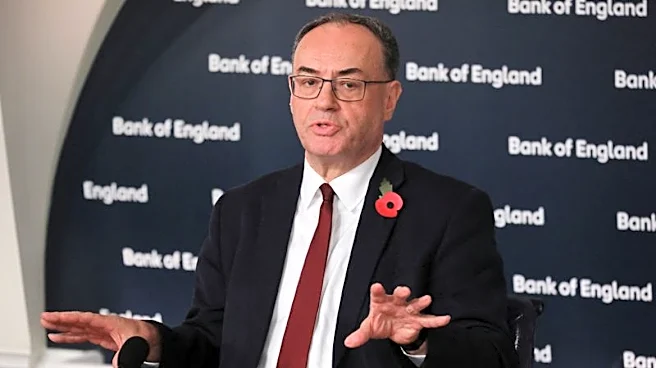
Bank of England Governor Andrew Bailey has cautioned that UK banks might transfer the financial burden of a recent tax increase to their customers. This could manifest as higher interest rates on loans or reduced rates on savings. The tax hike, implemented
by Chancellor John Healey, doubled the corporation tax surcharge on lenders to 6% starting in January, aiming to raise an additional £1.5 billion. While this was less than the initially feared 8%, banks have expressed concerns about its impact on lending costs and the UK's economic competitiveness. According to Mr. Bailey, banks operate in a market economy and will likely take actions to protect their earnings, making it unsurprising if they attempt to pass on these costs. This development comes amidst a period of rising energy costs and interest rates, with many households already facing increased mortgage payments.
Why It's Important?
This potential move by banks to pass on tax costs carries significant implications for UK households and the broader economy. If banks increase loan interest rates, it will further strain borrowers, including homeowners facing rising mortgage payments. The Bank of England's latest Financial Stability Report projects that approximately 6.5 million households will see increased mortgage repayments over the next three years, with many facing substantial jumps. Conversely, lower savings rates would diminish returns for savers, impacting their financial well-being. This situation could exacerbate the cost of living crisis, compelling households to reduce discretionary spending or draw down savings. While the Chancellor stated the tax measure was temporary and intended to fund support for household energy bills, industry figures like Lloyds Banking Group's chief financial officer, William Chalmers, have warned that it is 'unhelpful' for achieving UK economic growth and could increase the cost of borrowing.
What's Next?
The immediate future will likely see banks evaluating their strategies to mitigate the impact of the increased corporation tax surcharge. Their success in passing on these costs will depend on various factors, including market conditions and competition within the banking industry. Households should anticipate potential adjustments to loan and savings rates. Policymakers will be closely monitoring the economic fallout, particularly how these changes affect consumer spending and overall economic stability. The temporary nature of the tax, set for 15 months, suggests that its long-term effects will be assessed, and there may be calls for its review if the negative impacts on consumers and economic growth are significant. The ongoing challenge of high energy prices and inflation will continue to influence the Bank of England's monetary policy decisions, potentially leading to further interest rate adjustments.
Beyond the Headlines
The situation highlights a broader tension between government fiscal policy and its unintended consequences for consumers and the financial sector. While the tax hike aims to generate revenue for public support, it risks creating a ripple effect that could undermine household financial stability and economic growth. This scenario underscores the delicate balance policymakers must strike when implementing tax measures, particularly in a challenging economic environment. It also raises questions about the competitiveness of the UK banking sector and its ability to absorb increased costs without impacting its customer base. The long-term implications could include a shift in consumer banking behavior, increased pressure on financial regulators to ensure fair practices, and a re-evaluation of how the financial sector contributes to national economic stability and social welfare.