








What's Happening?
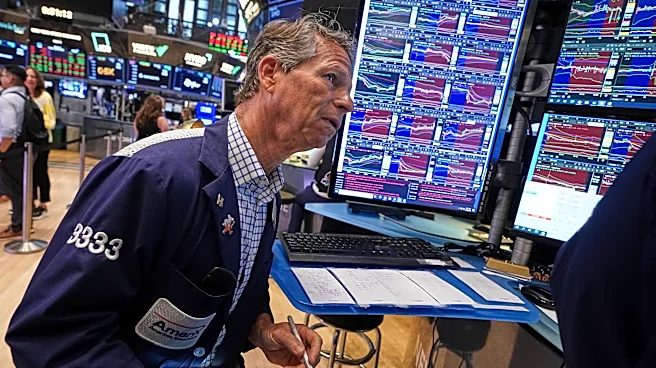
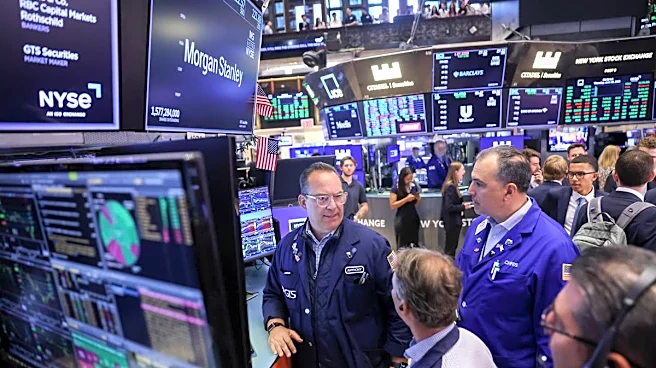
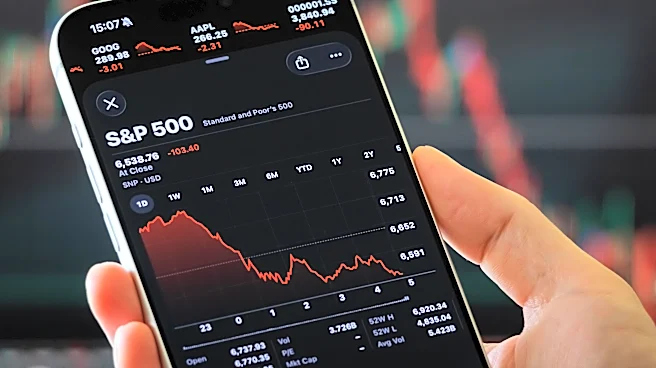
The stock market has experienced a notable shift in leadership driven by artificial intelligence (AI) technologies. According to CNBC, the first half of 2026 saw significant gains across major indices, with the S&P 500 rising by 9.6%, the Nasdaq by 12.8%,
and the Dow by 8.9%, marking the Dow's best first half since 2021. The Russell 2000 index, which tracks small-cap stocks, surged by approximately 22%, its best performance since 1991, although it experienced a slight decline of 0.55% on July 2. Meanwhile, the PHLX Semiconductor Index saw a decline, dropping 6.3% on Wednesday and 5.4% on Thursday, as investors took profits from chip stocks that had previously risen by over 80% in the first half of the year. In contrast, cybersecurity stocks like Palo Alto Networks and CrowdStrike saw significant gains, with Palo Alto increasing by 9% and CrowdStrike by 7% in a single session, as reported by 24/7 Wall St. These stocks achieved record highs following a strong quarter from April to June.
Why It's Important?
The shift in stock market leadership highlights the growing influence of AI technologies across various sectors. The significant gains in indices like the S&P 500 and Nasdaq reflect investor confidence in tech-driven growth, while the decline in semiconductor stocks suggests a potential re-evaluation of valuations after substantial early-year gains. The rise in cybersecurity stocks underscores the increasing importance of digital security in an AI-driven economy, as companies like Palo Alto Networks and CrowdStrike benefit from heightened demand for cybersecurity solutions. This trend could lead to increased investment in AI and cybersecurity sectors, potentially reshaping market dynamics and influencing future investment strategies. The performance of these stocks also reflects broader economic conditions, such as the impact of nonfarm payroll data on Federal Reserve rate hike expectations, which can affect market sentiment and investment decisions.
What's Next?
As the stock market continues to evolve, investors and analysts will likely monitor the performance of AI and cybersecurity stocks closely. The potential for further gains in these sectors could attract more investment, driving innovation and competition. Additionally, the Federal Reserve's monetary policy decisions, influenced by economic indicators like employment data, will play a crucial role in shaping market expectations and investor behavior. Companies in the semiconductor industry may need to reassess their strategies to maintain investor interest amid profit-taking activities. Overall, the ongoing AI-driven rotation in stock market leadership could lead to new opportunities and challenges for investors, businesses, and policymakers.