



What's Happening?
Natalya, a prominent figure in professional wrestling and a member of the Hart family, has publicly defended second and third-generation wrestlers, often referred to as 'nepo babies.' She argues that while a famous family name might provide an initial
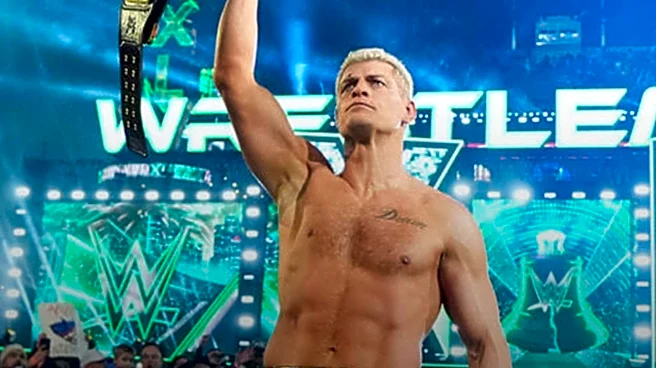
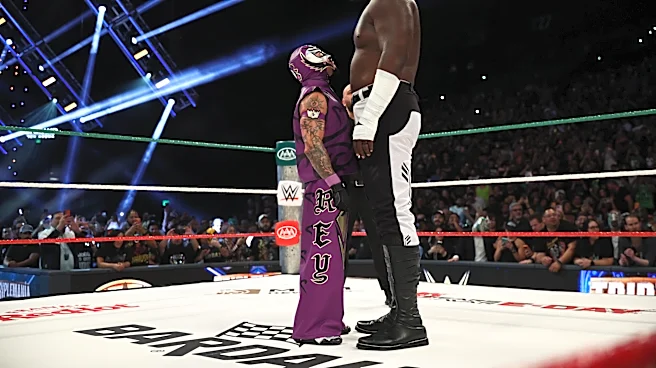
opportunity, a wrestler's success ultimately depends on their ability to perform and prove themselves in the ring. Speaking with MuscleManMalcolm, Natalya acknowledged that some of her favorite wrestlers, including Randy Savage, Rey Mysterio, Randy Orton, Cody Rhodes, and Roman Reigns, could be considered 'nepo babies,' but she believes they have all solidified their spots through hard work. She also cited her experience training Tatanka's two sons at the Dungeon, noting their talent and dedication rather than their father's legacy. Natalya contends that the family name only opens the door, and individuals must still 'kick the door in' with their own merit.
Why It's Important?
This discussion initiated by Natalya is significant for the professional wrestling industry as it addresses a long-standing debate about privilege and meritocracy. The concept of 'nepo babies' is not unique to wrestling but resonates across various entertainment and sports sectors in the U.S. Her perspective challenges the notion that inherited fame automatically guarantees success, emphasizing the importance of individual effort and talent. This viewpoint can influence how fans perceive wrestlers with famous lineages, potentially shifting focus from their background to their in-ring performance and dedication. For aspiring wrestlers, it highlights that while connections might help, sustained success requires genuine skill and hard work. It also provides insight into the internal dynamics of the wrestling world, where legacy families are a foundational element, yet individual achievement remains paramount.
What's Next?
Natalya's comments are likely to fuel further discussion within the wrestling community and among fans regarding the role of family legacy versus individual talent. This conversation may lead to more nuanced evaluations of wrestlers from famous families, with increased scrutiny on their performance and development rather than solely their lineage. Other wrestlers, promoters, and industry figures might weigh in, offering their own perspectives on the balance between inherited opportunities and earned success. This ongoing dialogue could influence scouting and development strategies within wrestling organizations, potentially leading to a greater emphasis on raw talent and work ethic, regardless of background. The debate also serves as a reminder that even in industries with strong dynastic traditions, the ultimate measure of success often comes down to what individuals achieve on their own merits.
Beyond the Headlines
The 'nepo baby' debate in wrestling, as articulated by Natalya, touches upon broader societal discussions about privilege, access, and merit. It reflects a common tension in American culture between the ideal of equal opportunity and the reality of inherited advantages. While wrestling is a unique entertainment form, the questions it raises about how individuals gain entry and succeed in competitive fields are universal. Natalya's argument that talent and hard work ultimately prevail, even for those with famous last names, speaks to a deeply held American belief in meritocracy. However, it also implicitly acknowledges that initial access can be a significant advantage. This conversation can prompt reflection on how various industries, beyond wrestling, grapple with similar issues of legacy, networking, and the pathways to success, and how these factors shape public perception and internal dynamics.