
What's Happening?
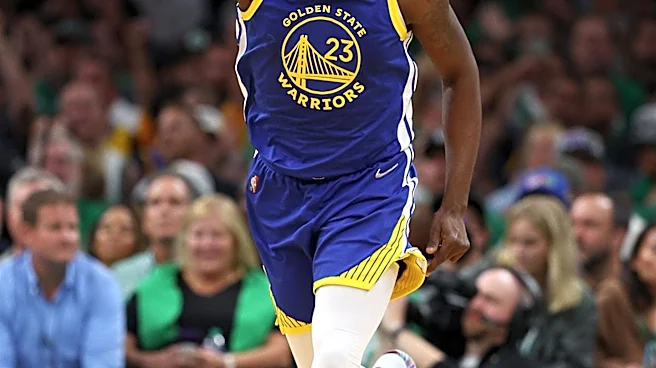
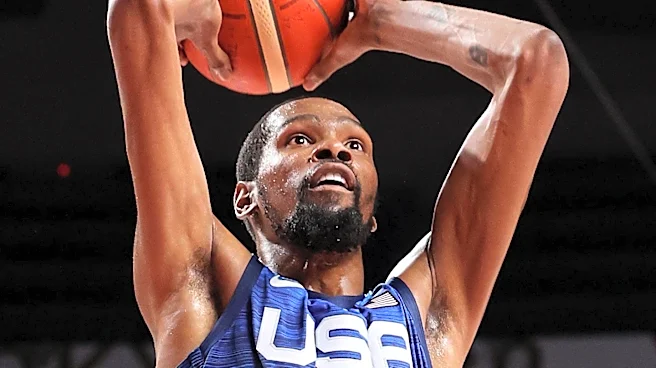
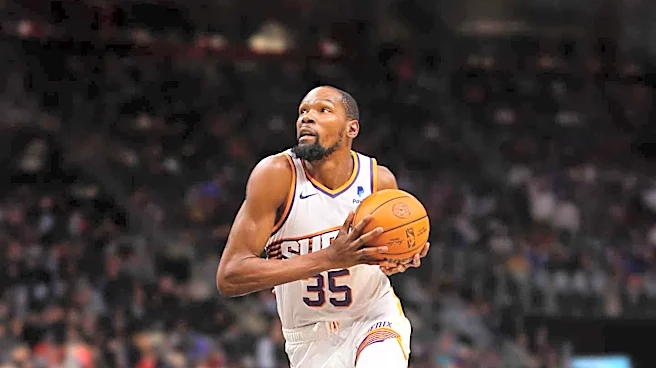
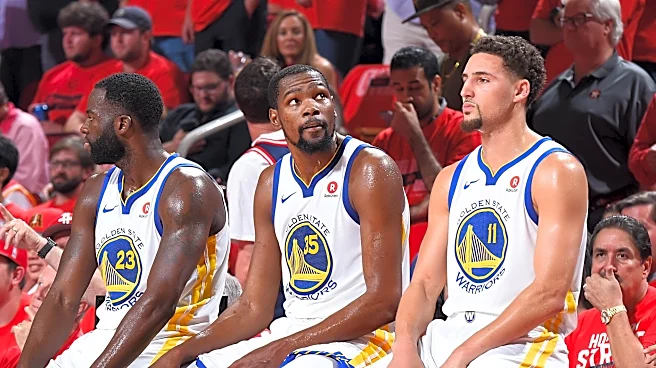
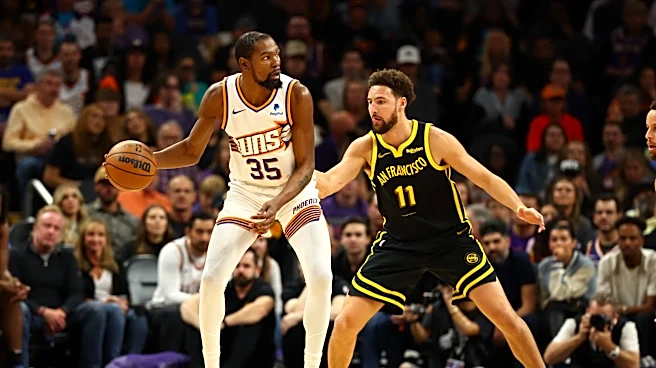
Kevin Durant has recently made comments comparing his former team, the Golden State Warriors, to the current Philadelphia 76ers, suggesting that the latter is more impressive on paper. This statement has reignited discussions about Durant's career decisions,
particularly his controversial move from the Oklahoma City Thunder to the Warriors in 2016. Durant's career has been marked by his exceptional talent on the court and his sensitivity to public opinion off it. Despite his achievements, including two NBA championships and Finals MVP awards with the Warriors, Durant has often been criticized for joining an already dominant team. His use of social media to defend his decisions and respond to critics has further fueled debates about his legacy. Durant's recent comments and his history of social media interactions reveal a player deeply concerned with how he is perceived, despite his public assertions of indifference.
Why It's Important?
Durant's career choices and public perception have significant implications for his legacy in the NBA. His move to the Warriors, while successful in terms of championships, has been viewed by some as a shortcut to success, affecting how his achievements are valued. This ongoing narrative highlights the complex relationship between athlete decisions, team dynamics, and public perception in professional sports. Durant's sensitivity to criticism and his active engagement on social media underscore the pressures athletes face in the digital age, where public opinion can be both immediate and pervasive. This situation reflects broader themes in sports about the balance between personal ambition and public expectation, and how athletes navigate their careers in the spotlight.
Beyond the Headlines
Durant's career trajectory and his interactions with the media and fans illustrate the evolving role of athletes in managing their public personas. His case highlights the challenges of maintaining a positive image while making career decisions that may not align with public sentiment. The scrutiny Durant faces is indicative of the broader cultural and media landscape, where athletes are expected to be both performers and public figures. This dual role can create tension, as seen in Durant's case, where his on-court success is sometimes overshadowed by off-court controversies. The situation also raises questions about the impact of social media on athlete mental health and the importance of support systems in helping athletes manage public pressure.