






What's Happening?
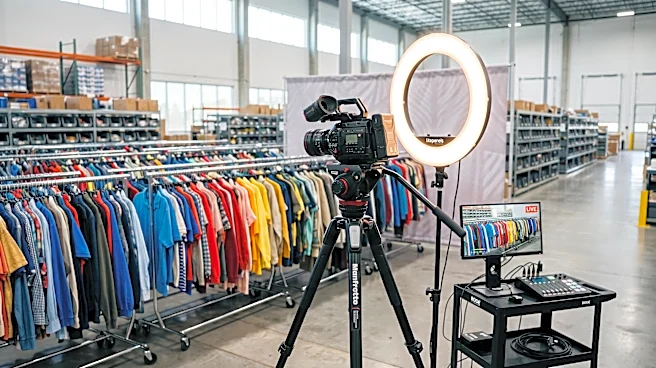
ThredUp, a prominent online resale platform, is significantly expanding its live selling initiatives in anticipation of the holiday shopping season. CEO James Reinhart announced during the company's third-quarter 2026 earnings call that ThredUp is 'all
in on live selling,' broadcasting directly from studios within its distribution centers. The company aims to become the dominant enterprise reseller of secondhand live goods. This strategic shift is driven by the rapid growth of the live selling industry in the U.S., which eMarketer reports is expanding four times faster than the resale industry. Early data from ThredUp's live selling on Whatnot, a digital live streaming shopping platform, indicates that 75% of customers who shopped there had never previously purchased from ThredUp. Additionally, the median average selling price (ASP) for similar aged items sold via live selling on Whatnot is 52% higher compared to ThredUp's core marketplace. ThredUp plans to establish up to 10 studios, enabling dozens of hosts to conduct live selling sessions for up to 18 hours daily across various platforms.
Why It's Important?
This expansion by ThredUp highlights a significant trend in the U.S. retail landscape: the increasing adoption and effectiveness of live selling, particularly within the secondhand market. For ThredUp, this move is crucial for attracting new customers, as evidenced by the high percentage of first-time ThredUp shoppers engaging through live selling. The higher ASPs achieved through live selling also point to improved unit economics, as buyers often cover shipping costs and returns are fewer. This model could enhance profitability for resale platforms. The cross-generational appeal of live selling, with Millennials, Gen Z, and Gen X making up 67% of live shoppers and Baby Boomers accounting for 31% of purchases in 2025, demonstrates its broad market potential. As the holiday season becomes increasingly competitive, ThredUp's investment in live selling could provide a distinct advantage by offering an interactive and engaging shopping experience that differentiates it from traditional online resale.
What's Next?
ThredUp's live selling operations are expected to ramp up considerably during the fourth quarter, coinciding with the critical holiday shopping period. The company's goal is to leverage this channel to reach a wider audience seeking more affordable gifting options. The success of this initiative will likely influence future investment in live selling infrastructure and host recruitment. Other online retailers, especially those in the resale sector, will be closely monitoring ThredUp's performance. If ThredUp's strategy proves highly successful in boosting sales and customer acquisition, it could prompt a broader shift towards live selling as a primary sales channel across the U.S. e-commerce market. The continued growth of the live selling industry suggests that more platforms and brands will explore or expand their presence in this interactive retail format.
Beyond the Headlines
The rise of live selling, as exemplified by ThredUp's aggressive expansion, signifies a broader evolution in consumer behavior and e-commerce. It blurs the lines between entertainment and shopping, creating a more dynamic and personalized experience that traditional online retail often lacks. This trend also underscores the growing importance of authenticity and real-time interaction in purchasing decisions, particularly for secondhand goods where condition and fit are critical. The ability for consumers to see items showcased, ask questions, and interact with hosts in real-time addresses some of the inherent challenges of online resale, such as trust and product visualization. Furthermore, the success of live selling platforms like Whatnot in driving sales for ThredUp suggests a potential shift in how consumers discover and engage with brands, moving towards more creator-led and interactive commerce models. This could lead to new opportunities for content creators and a re-evaluation of marketing strategies for e-commerce businesses.