



What's Happening?
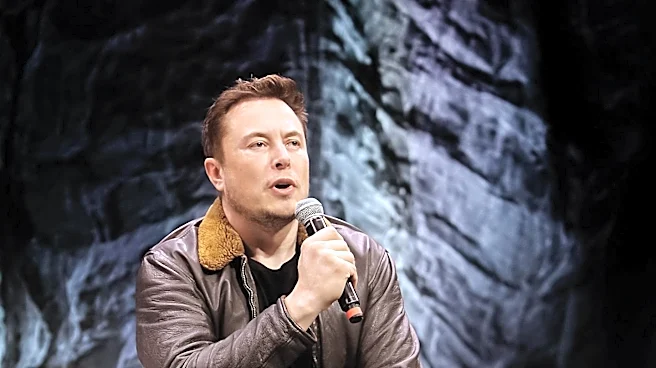
At the Baron Investment Conference 2026, Elon Musk discussed his vision for TeraFab, a terawatt-scale chip fabrication project, and the rapid expansion of AI data centers. He noted that while TSMC and Samsung are building fabs in the U.S., the overall
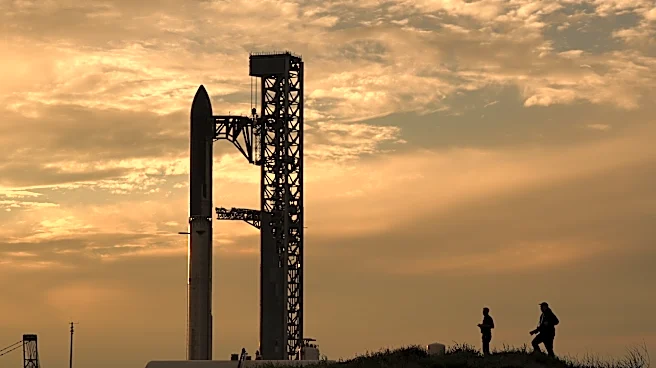
chip fabrication in the U.S. remains a small fraction of what is produced in Asia. Musk expressed concern about geopolitical risks in Asia affecting chip supply and emphasized the need for silicon production in the U.S. He also highlighted SpaceX's ability to build data centers faster and cheaper than competitors, attributing this to a vertically integrated approach and a culture of rapid iteration. SpaceX's revenue is projected to exceed $100 billion annually by December and potentially $500 billion by December of next year, driven by data center services and Starlink expansion.
Why It's Important?
Musk's insights underscore critical challenges and opportunities in the U.S. technology and manufacturing sectors. His push for domestic chip production through TeraFab addresses national security concerns related to supply chain vulnerabilities and geopolitical risks. The rapid, cost-effective construction of data centers by SpaceX could significantly accelerate AI development and deployment in the U.S., providing a competitive edge in the global AI race. The projected exponential revenue growth for SpaceX, particularly from AI-related services and Starlink, indicates a massive shift in economic power towards companies capable of delivering foundational infrastructure for the AI era. This could reshape investment landscapes and create new economic hubs, while also highlighting the increasing demand for power and physical infrastructure to support AI.
What's Next?
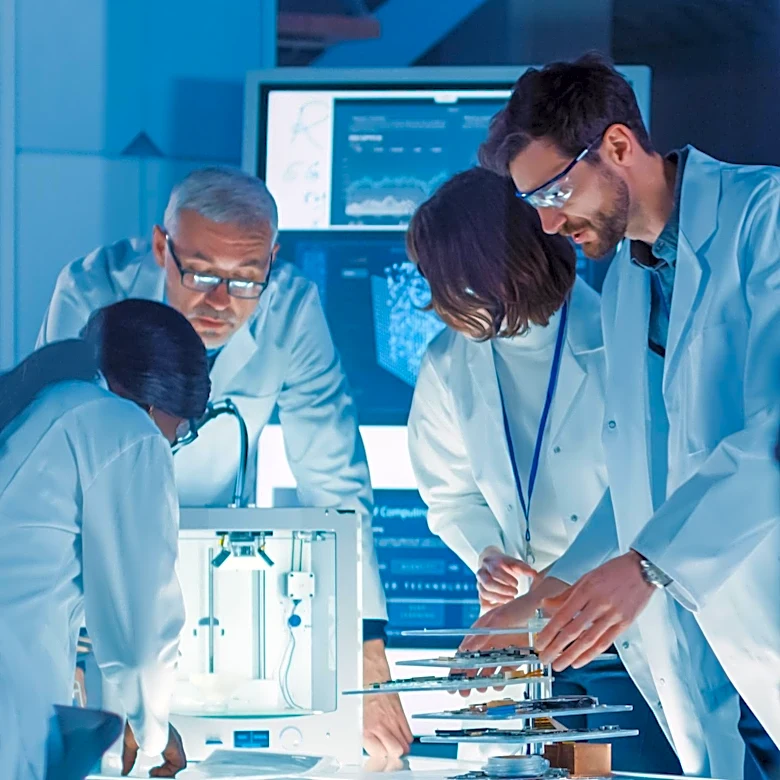
Musk plans to build a research chip fab in Austin, Texas, to experiment with new fabrication approaches, aiming to reduce chip design and testing cycles from a year to a month. The production TeraFab will be located in Grimes County, Texas, near Texas A&M, to scale up AI chip production. SpaceX is also preparing to launch its first Starmind computers, co-designed with NVIDIA, in Q3 of next year, with significant volume expected by 2028-2029. This initiative aims to move AI compute to space, addressing power constraints on Earth and potentially offering a competitive advantage against other nations. The company also anticipates replacing Starlink satellites every five years with versions offering ten times the capacity, further boosting its revenue potential.
Beyond the Headlines
Musk's ambitious plans for TeraFab and space-based AI data centers represent a paradigm shift in how critical infrastructure is conceived and deployed. The idea of moving intelligence to space to overcome terrestrial power limitations and geopolitical risks is a bold vision that could fundamentally alter global economic and strategic balances. This approach challenges traditional notions of national industrial capacity and could lead to a new era of space-based economic activity. Furthermore, his critique of the chip industry's risk aversion and his emphasis on rapid iteration highlight a cultural divide between established manufacturing giants and agile tech innovators, potentially driving broader changes in industrial practices and innovation cycles.