





What's Happening?
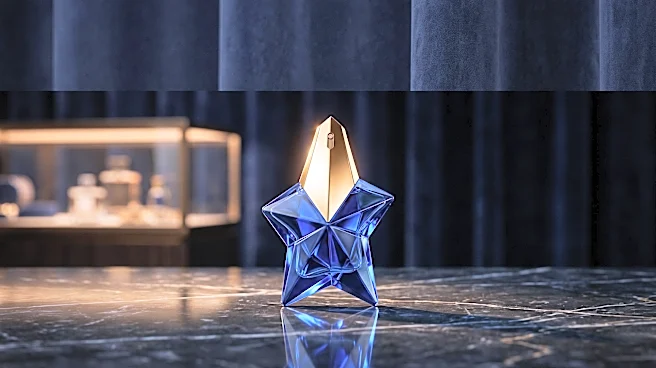
Thierry Mugler, who established his fashion house in the 1970s, significantly impacted the perfumery industry by introducing the first gourmand perfume. This innovation began with the launch of 'Angel' in 1992, a fragrance widely recognized for its distinctive
blue star bottle. 'Angel' is credited with pioneering a new category of feminine scents characterized by sweet, dessert-like notes. Beyond this groundbreaking creation, Mugler's brand has also developed other notable perfumes, including 'Alien,' 'Womanity,' and 'Innocent,' further solidifying its influence in the fragrance market. The brand's approach to perfumery has been described as revolutionary, setting new trends and expanding the olfactory landscape for consumers.
Why It's Important?
The introduction of gourmand perfumes by Thierry Mugler marked a pivotal shift in the fragrance industry, influencing subsequent perfume development and consumer preferences. Before 'Angel,' sweet and edible notes were not commonly central to high-end perfumes. Mugler's success demonstrated a demand for these novel scent profiles, prompting other perfumers to explore similar avenues. This innovation broadened the scope of perfumery, offering consumers a wider range of olfactory experiences beyond traditional floral, woody, or oriental categories. The enduring popularity of 'Angel' and its successors highlights the lasting impact of Mugler's vision, establishing gourmand as a significant and commercially successful fragrance family. This shift also reflected evolving consumer tastes, moving towards more comforting and indulgent scent experiences.
What's Next?
The legacy of Thierry Mugler's gourmand perfumes continues to shape the fragrance market. Future developments are likely to see continued innovation within the gourmand category, with perfumers experimenting with new combinations of sweet and savory notes, as well as incorporating sustainable and ethically sourced ingredients. The brand itself may continue to release new iterations or flankers of its popular scents, such as 'Angel Muse,' to maintain consumer interest and adapt to contemporary trends. The broader industry will likely observe how consumer preferences for gourmand scents evolve, potentially leading to new sub-categories or fusions with other fragrance families. The influence of Mugler's pioneering work will remain a benchmark for creativity and market disruption in perfumery.
Beyond the Headlines
Thierry Mugler's impact extends beyond mere product innovation; it represents a cultural shift in how fragrance is perceived and marketed. By introducing 'Angel,' Mugler challenged conventional notions of femininity and luxury in perfumery, moving away from purely floral or musky associations towards a more playful, indulgent, and even audacious scent profile. This move democratized luxury fragrance to some extent, making it more accessible to a broader audience who might have found traditional perfumes less appealing. The distinctive bottle designs, particularly the blue star of 'Angel,' also contributed to the brand's iconic status, blending fashion, art, and scent into a cohesive and memorable experience. This holistic approach to brand building has set a precedent for how fragrance houses engage with consumers, emphasizing storytelling and visual identity alongside olfactory artistry.