






What's Happening?
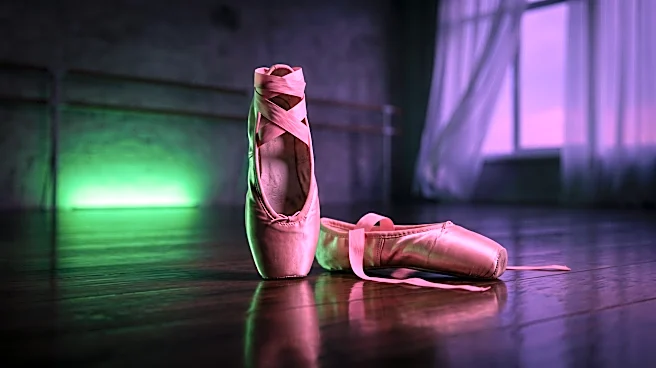
Jung Chae-yeon is slated to take on a challenging triple role in the upcoming Tving series 'M: Reboot,' scheduled for release in 2027. She will portray Ma-ri, a high school ballerina experiencing nightmares; Jenny, a mysterious surgeon from the United
States; and 'M,' a terrifying alternate personality that emerges within her. The series is a modern psychological horror thriller that reinterprets the 1994 Korean drama 'M.' Unlike the original, which focused on demonic possession and the social taboo of abortion, 'M: Reboot' will center on dissociative identity disorder. Jung Gun-joo will co-star as a detective investigating incidents linked to a haunting green light that triggers decade-old memories. This project is part of a broader trend in Korea's streaming platforms to revive and modernize legacy intellectual properties from the 1990s and 2000s.
Why It's Important?
The production of 'M: Reboot' highlights a significant trend in the entertainment industry, particularly within streaming services, to leverage established intellectual properties (IPs). This strategy is seen as a safe choice in a highly competitive market, allowing platforms to attract a broad demographic by appealing to both nostalgia in older audiences and offering fresh content to younger viewers. By reimagining classic stories with modern sensibilities, such as shifting from supernatural horror to psychological thriller and focusing on dissociative identity disorder, the series aims to resonate with contemporary audiences. This approach minimizes risk by building on proven success while adapting themes to current societal values, such as women's rights, which were viewed differently in the past. The success of such reboots could influence future content development strategies for streaming platforms globally, including those operating in the U.S. market, by demonstrating the viability of modernizing classic narratives.
What's Next?
The series 'M: Reboot' is slated for release in 2027 on the Tving streaming platform. Its development is part of a larger 'retro wave' in Korean streaming, with other platforms like Wavve also preparing spin-offs and standalone series from popular 1990s and 2000s IPs, such as 'Hello, Franceska' and 'Muhan Company.' Industry experts suggest that the key to the success of these reboots lies in their ability to reinterpret stories with modern sensibilities and perspectives. For 'M: Reboot,' this means adapting the narrative to reflect contemporary understanding of themes like women's rights and psychological conditions, rather than the original's focus on abortion as a taboo. The reception of 'M: Reboot' will likely influence future investment in similar projects, potentially setting a precedent for how legacy content is adapted for new generations and global audiences.
Beyond the Headlines
The revival of 'M' as 'M: Reboot' delves into deeper implications beyond mere entertainment, touching upon the evolving cultural and ethical landscape. The original series, groundbreaking for its time, tackled the sensitive issue of abortion through a supernatural lens. The modern adaptation's shift to dissociative identity disorder reflects a societal move towards psychological understanding and away from purely supernatural or moralistic interpretations of complex human conditions. This change also highlights the increasing emphasis on women's rights and perspectives in storytelling, allowing for a more nuanced exploration of female protagonists' experiences. The trend of reinterpreting legacy IPs with modern sensibilities underscores a continuous negotiation between cultural heritage and contemporary values, demonstrating how media can both reflect and shape societal discourse. This approach also raises questions about the balance between preserving the essence of original works and adapting them to remain relevant and impactful in a changing world.