






What's Happening?
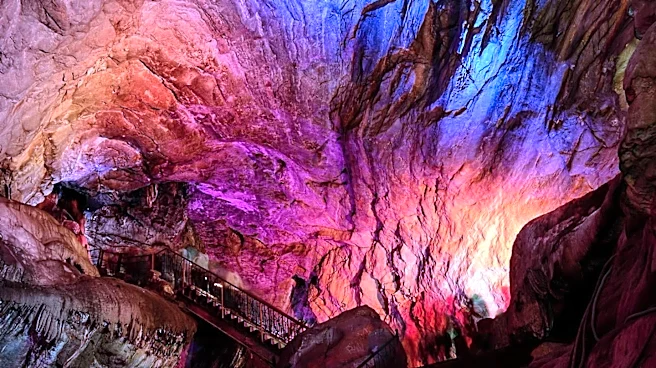
Mammoth Cave, located in Kentucky, is the world's longest cave system, stretching 426 miles and reaching depths of 118 meters. The cave, part of Mammoth Cave National Park, is renowned for its unique limestone formations and diverse ecosystem, housing
over 130 species. Notable inhabitants include cave crickets, fishing spiders, and Rafinesque big-eared bats. The cave has a rich history, with evidence of human use dating back 5,000 years. In 1972, explorers connected Mammoth Cave with the Flint Ridge cave system, significantly extending its known length. The park was designated a UNESCO World Heritage site in 2002.
Why It's Important?
Mammoth Cave's designation as a UNESCO World Heritage site highlights its global significance as a natural wonder and a biodiversity hotspot. The cave's unique ecosystem provides valuable insights into subterranean life and the evolutionary adaptations of cave-dwelling species. The park attracts researchers and tourists alike, contributing to local and state economies. Its preservation is crucial for maintaining biodiversity and supporting scientific research. The cave's history and cultural significance also offer educational opportunities, promoting awareness of natural heritage and conservation efforts.