








What's Happening?
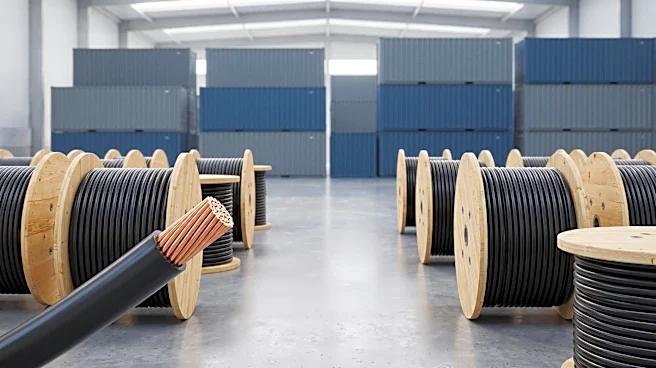
The U.S. Department of Commerce has proposed expanding existing tariff structures under Section 232 of the Trade Expansion Act of 1962 to include 14 new categories of goods. Among these are four types of electric conductor cables. The American Council
on Renewable Energy (ACORE) has submitted comments arguing that these conductor cables should be subject to a 15% tariff instead of the proposed 25%. ACORE contends that a lower tariff rate would better support the administration's objective of accelerating the significant industrial base buildout currently underway across the country. This proposal aims to adjust trade policies concerning specific imported goods, potentially impacting various industries reliant on these materials.
Why It's Important?
This proposal is significant for U.S. industries, particularly those involved in renewable energy and infrastructure development. The imposition of higher tariffs on electric conductor cables could increase the cost of materials essential for grid infrastructure projects, potentially slowing down the expansion of the industrial base and the deployment of renewable energy technologies. ACORE's argument highlights a potential conflict between trade protectionist measures and broader economic development goals. If the 25% tariff is implemented, it could lead to increased operational costs for U.S. companies, which might be passed on to consumers or result in reduced investment in critical infrastructure. Conversely, a 15% tariff, as suggested by ACORE, could strike a balance, providing some level of protection for domestic industries while mitigating adverse impacts on growth and development initiatives.
What's Next?
The U.S. Department of Commerce will review the comments received, including those from ACORE, regarding the proposed tariff rates. A final decision on the implementation of these additional Section 232 duties and their specific rates will be made following this review process. Stakeholders, including industry associations and manufacturers, will be closely monitoring the Commerce Department's decision, as it will directly influence their procurement strategies and project costs. The outcome will determine the financial landscape for companies involved in electric conductor cable manufacturing and the broader energy and infrastructure sectors.
Beyond the Headlines
The debate over these tariffs extends beyond immediate economic costs, touching upon the broader strategy of balancing trade protectionism with national industrial policy. The Section 232 tariffs are intended to protect domestic industries deemed critical for national security. However, the inclusion of essential components like electric conductor cables raises questions about the potential for these measures to inadvertently hinder other strategic objectives, such as the transition to renewable energy and the modernization of the U.S. power grid. This situation underscores the complex interplay between trade policy, industrial growth, and environmental goals, highlighting the need for a nuanced approach to tariff implementation that considers both direct and indirect economic impacts.