






What's Happening?
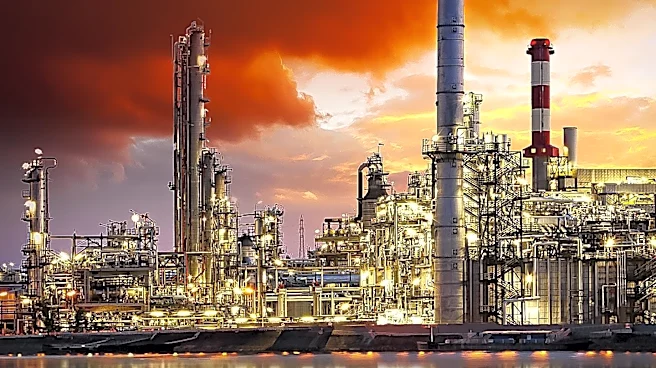
The U.S. refining industry, a critical component of the nation's energy security, is facing strategic challenges due to its reliance on global capital. The United States, having become the world's largest producer of crude oil and natural gas, still depends
on a sophisticated refining system to process crude into gasoline, diesel, and other products. However, the ownership and investment in this infrastructure are increasingly influenced by international capital markets. Foreign corporations and global asset managers hold significant stakes in American refining assets, raising questions about the alignment of investment decisions with U.S. energy security needs. The situation becomes particularly pressing during geopolitical tensions, such as potential disruptions in the Strait of Hormuz, which could impact global oil prices and the U.S. refining sector's operations.
Why It's Important?
The strategic importance of the U.S. refining industry extends beyond domestic fuel supply, as it supports manufacturing and provides fuel to global markets. The reliance on international capital for investment in refining infrastructure poses a potential risk to national energy security. Investment decisions driven by global capital markets may not always align with the long-term needs of U.S. consumers and policymakers. This misalignment could affect the industry's ability to respond to geopolitical crises, such as disruptions in global oil supply routes. Ensuring the resilience of the U.S. refining system is crucial for maintaining energy security and economic stability, highlighting the need for strategic investment in infrastructure and capacity.
What's Next?
Future developments in the U.S. refining industry will likely focus on securing investment that aligns with national energy security priorities. This may involve encouraging domestic investment and ensuring that foreign investments support the long-term resilience of the refining infrastructure. Policymakers and industry leaders may need to address regulatory and financial challenges to facilitate necessary investments in modernization and capacity expansion. Additionally, the industry must prepare for potential geopolitical disruptions by enhancing its ability to process diverse crude sources and maintain reliable supply chains. The ongoing evaluation of ownership and investment strategies will be critical in sustaining the U.S. refining advantage.
Beyond the Headlines
The influence of global capital on the U.S. refining industry raises broader questions about the intersection of national security and international investment. As the industry navigates these challenges, there may be increased scrutiny on the role of foreign ownership in critical infrastructure. This could lead to policy discussions on balancing open investment with safeguarding national interests. The situation also underscores the importance of strategic planning in the energy sector, as the U.S. seeks to maintain its position as a global energy leader while ensuring domestic energy security.