





What's Happening?
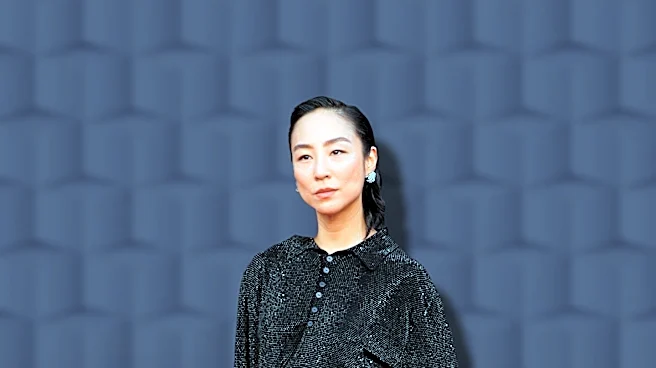
Filmmaker Chloé Zhao, known for her Oscar-winning work on 'Nomadland' and her Marvel adaptation 'Eternals,' defended comic-book movies during a masterclass at the Venice Film Festival. Zhao, who initially aspired to be a manga artist, expressed her love
for directing 'Eternals,' calling it 'a girl’s dream come true' and equating comic books to the Western equivalent of manga. She emphasized the importance of not dismissing stories based on whether they are considered 'high art,' stating that the purpose of storytelling is to create containers for people to process their experiences, often through shared archetypes found in myths. Zhao drew parallels between 'Eternals' and 'Nomadland,' noting that both involve 'people in nature… with animals… who have complicated relationships with them.' This stance contrasts with other prominent filmmakers, such as Martin Scorsese, who have criticized superhero films. Despite 'Eternals' falling short of box office expectations, Zhao maintains that all forms of entertainment hold value. She also shared personal reflections on her journey into filmmaking, her past as a bartender, and her current existential crisis about whether she is missing life by constantly trying to capture it through screens.
Why It's Important?
Chloé Zhao's defense of comic-book movies at a prestigious event like the Venice Film Festival is significant for several reasons. It challenges the ongoing debate within the film industry about the artistic merit and cultural impact of large-scale franchise films versus independent or 'arthouse' cinema. Her perspective, coming from a director who has achieved critical acclaim in both realms, offers a nuanced view that bridges the perceived gap between these two forms of storytelling. By asserting that all stories, regardless of their perceived artistic status, serve a crucial purpose in helping audiences process life, Zhao advocates for a more inclusive understanding of cinematic value. This can influence how critics, audiences, and aspiring filmmakers approach different genres, potentially fostering a greater appreciation for the storytelling potential within comic-book adaptations. Her comments also highlight the personal connection many creators have to these narratives, stemming from childhood aspirations and cultural influences, which adds a layer of authenticity to their work in the genre.
What's Next?
The ongoing discussion about the artistic value of comic-book movies is likely to continue, with Chloé Zhao's comments adding a significant voice to the defense of the genre. Her perspective may encourage other filmmakers to explore these narratives with a similar depth and thematic ambition, potentially leading to more critically acclaimed comic-book adaptations. For the industry, this could mean a continued push for diverse storytelling within established franchises, moving beyond purely commercial considerations. Audiences might also be encouraged to view these films through a broader lens, appreciating their archetypal narratives and emotional resonance. Zhao's personal reflections on her filmmaking journey and existential questions could also inspire discussions among artists about the balance between creation and lived experience, influencing future approaches to storytelling and the creative process in general.
Beyond the Headlines
Chloé Zhao's argument extends beyond a simple defense of comic-book movies; it touches upon fundamental questions about the nature of art, storytelling, and cultural hierarchy. Her assertion that 'it’s important to not write off stories because we don’t consider them high art' challenges the elitist tendencies that can sometimes permeate artistic discourse. This perspective suggests that the impact and purpose of a story should be judged by its ability to connect with an audience and help them understand the human condition, rather than by its budget, genre, or perceived intellectual complexity. By drawing parallels between 'Eternals' and 'Nomadland,' Zhao subtly critiques the artificial boundaries often erected between different cinematic forms, advocating for a more holistic appreciation of narrative. This broader implication encourages a re-evaluation of what constitutes 'art' in popular culture and how diverse forms of media contribute to collective understanding and emotional processing.