






What's Happening?
Broadcom (AVGO) shares dropped 10.4% on Thursday, November 5, 2026, while the S&P 500 fell 4.4%. This decline occurred without any specific announcements, earnings reports, or filings from Broadcom. The broader chip sector experienced a downturn on the same
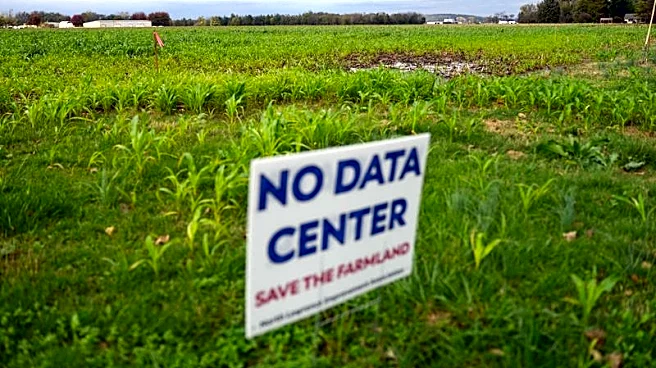
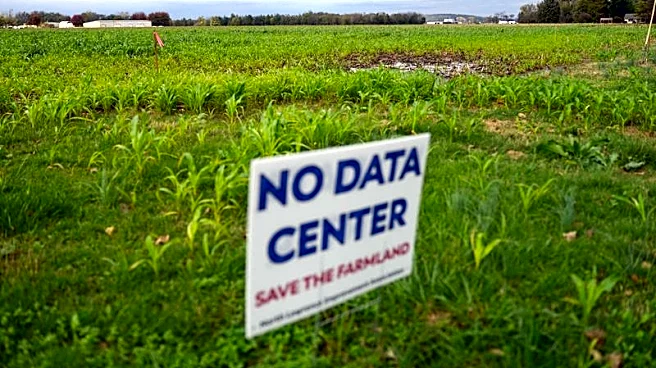
day, with all five companies on Broadcom's Trefis peer list also retreating. Advanced Micro Devices saw the steepest decline at 17.3%, while Nvidia experienced the mildest at 9.3%. The technology sector fund XLK lost 8.0%, and the Nasdaq Composite fell 5.5%. The widespread drop in chip stocks is attributed to post-election concerns regarding a potential slowdown in data center construction. Reports from The Motley Fool indicated that new governors in Texas, Ohio, and Georgia, key states for AI data centers, were promising construction moratoriums. Qualcomm also contributed to the sector's unease by issuing light guidance with its results, leading to a 9.5% drop in its stock during the session.
Why It's Important?
The significant drop in Broadcom's stock, alongside its peers, highlights the sensitivity of the semiconductor industry to political and economic shifts, particularly concerning infrastructure development. Broadcom's substantial reliance on AI semiconductor revenue, which constituted 56% of its total revenue in fiscal Q3 2026, makes it particularly vulnerable to any slowdown in data center expansion. The company's AI sales, comprising custom accelerators and AI networking chips, are primarily driven by a small group of major customers including Google, Anthropic, OpenAI, and Meta. Management's previous guidance for fiscal 2028 AI outlook was based on the readiness of customer data center sites, indicating that potential construction moratoriums could directly impact future revenue projections. This situation underscores the interconnectedness of technological growth, state-level policy, and investor confidence in the U.S. market.
What's Next?
Broadcom is scheduled to report its fiscal fourth quarter of 2026 results in December 2026. Investors will be closely watching the company's AI revenue figures, which management had previously guided to $21.7 billion for that quarter. The impact of potential data center construction moratoriums in key states like Texas, Ohio, and Georgia will likely be a significant topic of discussion during the earnings call. The market will also be looking for updated guidance from Broadcom regarding its AI outlook for fiscal 2028, especially in light of the recent political developments. The performance of the broader Nasdaq Composite and technology sector fund XLK in the coming weeks will also provide context for whether the recent downturn was a temporary blip or a sign of a more sustained trend in the tech industry.
Beyond the Headlines
The recent stock market reaction to potential data center construction moratoriums reveals a deeper vulnerability within the rapidly expanding AI infrastructure sector. The reliance of major AI players on specific geographic regions for data center development means that state-level political decisions can have significant national economic repercussions. This situation could prompt technology companies to diversify their data center locations or engage more actively in state-level policy discussions to mitigate future risks. Furthermore, it highlights the growing intersection of technology policy and economic development, where decisions made by state governors can directly influence the valuations of leading technology firms and the overall health of the U.S. tech economy. The incident also underscores the speculative nature of AI investments, where future growth is heavily dependent on infrastructure build-out that can be influenced by external factors.