








What's Happening?
Recent developments in electric vehicle (EV) charging infrastructure have significantly improved the experience for EV drivers, as evidenced by a recent 600-mile road trip. Historically, EV fast charging has been a concern for potential buyers, with issues
such as unreliable chargers and long wait times. However, during a recent trip from the U.S. to Montreal, the charging experience was nearly flawless, marking a stark contrast to a similar trip three years ago. The use of apps like A Better Route Planner (ABRP) has optimized charging stops, and the availability of reliable chargers, such as those from Rivian, has enhanced the overall experience. The trip involved using an Audi e-tron, which, despite its shorter range compared to other models, managed the journey effectively with strategic charging stops.
Why It's Important?
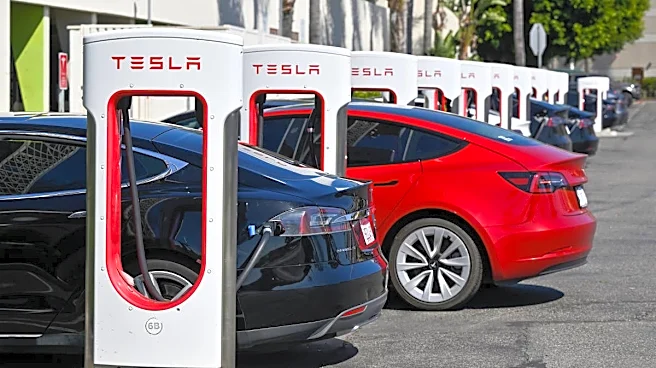
The improvement in EV charging infrastructure is crucial for the broader adoption of electric vehicles in the U.S. As charging reliability increases, consumer confidence in EVs is likely to grow, potentially accelerating the transition from traditional gasoline vehicles to electric ones. This shift is significant for reducing carbon emissions and achieving environmental sustainability goals. The expansion and reliability of charging networks, including Tesla's, which now allows access to non-Tesla vehicles, play a vital role in this transition. Enhanced charging infrastructure also supports the U.S. government's initiatives to promote clean energy and reduce dependence on fossil fuels.
What's Next?
Continued expansion and improvement of EV charging networks are expected, with more chargers being added monthly and existing ones being repaired more swiftly. This trend is likely to continue as competition among charging network providers intensifies, further enhancing the reliability and accessibility of EV charging. As infrastructure improves, it is anticipated that more consumers will consider purchasing EVs, contributing to a more sustainable transportation future. Stakeholders, including automakers and government agencies, are likely to continue investing in and supporting the development of robust charging networks.