






What's Happening?
The Vietnamese found-footage horror film 'Lầu Chú Hỏa: The Deadliest Mansion' is set to premiere in North American theaters on September 4. Mockingbird Pictures is handling the distribution, with screenings planned across major cinema chains including
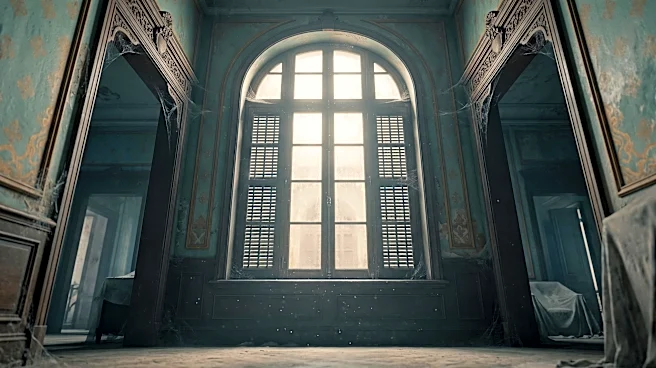
AMC, Regal, and Cinemark. Directed by Hùng Trần, the film made history as Vietnam's first theatrical found-footage horror release and achieved significant success at the local box office following its June debut. It quickly became a breakout hit, attracting over one million admissions and grossing more than VND78 billion (approximately $3 million). The narrative draws from a well-known Vietnamese urban legend, centering on a group of young streamers who infiltrate the reputedly haunted Hứa family estate in pursuit of fame and wealth. Their live broadcast inadvertently captures the reawakening of a malevolent entity, drawing them into a century-old tale known as the 'Ghost of the Hứa Family.' The entire film is presented in the found-footage style, aiming to immerse the audience directly into the unfolding horror.
Why It's Important?
The North American release of 'Lầu Chú Hỏa: The Deadliest Mansion' signifies a growing trend of international genre films, particularly from Southeast Asia, gaining traction in the U.S. market. This distribution deal by Mockingbird Pictures highlights an increasing appetite among American audiences for diverse cinematic experiences beyond traditional Hollywood productions. For the Vietnamese film industry, this marks a significant step in expanding its global reach and showcasing its unique storytelling and cultural narratives. The film's success in its home country demonstrates its appeal, and a positive reception in North America could open doors for more Vietnamese productions to enter the international circuit. This move also underscores the potential for found-footage horror, a subgenre that often transcends language barriers due to its immersive and visceral nature, to resonate with a broader audience. It provides an opportunity for U.S. viewers to engage with a horror story rooted in Vietnamese folklore, offering a fresh perspective within the genre.
What's Next?
Following its North American theatrical release on September 4, the performance of 'Lầu Chú Hỏa: The Deadliest Mansion' at the U.S. box office will be closely watched. Its success could influence future distribution strategies for other Vietnamese and Southeast Asian films in the American market. Mockingbird Pictures, which aims to bring Vietnamese commercial films to international audiences, will likely use this release as a benchmark for its ongoing efforts. A strong showing could encourage more U.S. distributors to invest in foreign-language genre films, potentially leading to increased diversity in cinematic offerings. Furthermore, the film's reception could impact co-production ventures, as 'Lầu Chú Hỏa' was produced by Runup Vietnam alongside South Korea's Hive Media Corp, marking Hive's first production investment outside its home market. Future collaborations between Vietnamese and international production companies may increase if this film proves to be a commercial and critical success in North America.
Beyond the Headlines
The release of 'Lầu Chú Hỏa: The Deadliest Mansion' in North America extends beyond mere box office numbers; it represents a cultural exchange and an opportunity to introduce Vietnamese folklore and storytelling traditions to a wider audience. Horror, as a genre, often serves as a vehicle for exploring societal fears, historical traumas, and cultural beliefs. By presenting a story rooted in a Vietnamese urban legend, the film offers U.S. audiences a glimpse into a different cultural context and its unique anxieties. This can foster greater understanding and appreciation for diverse narratives. Ethically, it also highlights the importance of authentic representation in international film distribution, ensuring that the cultural nuances and original intent of the filmmakers are preserved. The success of such films can challenge the dominance of Western narratives in the global film industry, promoting a more inclusive and diverse cinematic landscape where stories from various cultures can find a broader platform and resonate with audiences worldwide.