



What's Happening?
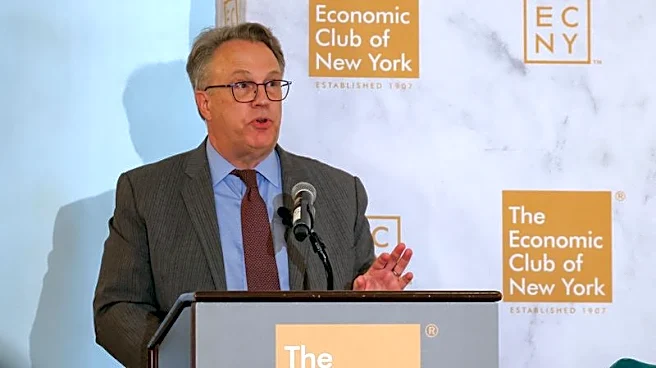
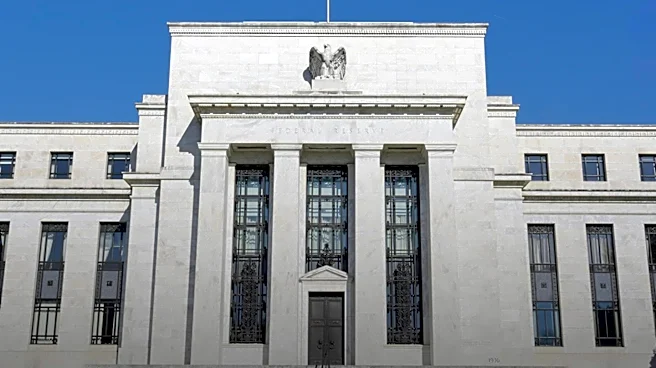
Beth M. Hammack, President and Chief Executive Officer of the Federal Reserve Bank of Cleveland, delivered a speech at the Brookings Institution in Washington D.C., focusing on strengthening the resilience and liquidity of the U.S. Treasury market. Hammack emphasized
the critical role of the Treasury market for the U.S. and global economy, as well as for monetary policy transmission. Drawing lessons from past stress events, such as March 2020, she advocated for clear principles on when and how the Federal Reserve should intervene in the market. Hammack stressed the importance of distinguishing between market-functioning actions and unconventional monetary policy actions, suggesting the creation of an explicit market-functioning facility or a separate portfolio for financial stability purchases. She also proposed enhancements to standing repurchase agreement (SRP) operations and clear communication strategies during interventions.
Why It's Important?
The U.S. Treasury market is the deepest and most liquid government bond market globally, serving as a benchmark for nearly every dollar asset and central to monetary policy. Any dysfunction in this market can have widespread repercussions, impacting borrowing costs for households and businesses, and potentially spreading into the real economy. Hammack's insights are crucial for ensuring financial stability and effective monetary policy transmission. Her call for clear guidelines and communication regarding Fed interventions aims to prevent confusion and enhance market confidence during times of stress. This proactive approach is vital for policymakers to be prepared for future market disruptions, safeguarding the integrity of the financial system and the broader economy.
What's Next?
Hammack's remarks are intended to catalyze further discussion among policymakers within the Federal Reserve and other relevant agencies regarding the principles for intervening in stressed markets. The Federal Open Market Committee (FOMC) is expected to consider these recommendations, potentially leading to refinements in existing frameworks for market intervention. This could include formalizing criteria for when intervention is warranted, developing new tools or enhancing existing ones like SRP operations, and establishing clearer communication protocols. The goal is to build a robust plan to fight and prevent future market instabilities, ensuring that the Fed can act decisively and transparently when needed to maintain financial stability.
Beyond the Headlines
The discussion around Treasury market resilience touches upon fundamental aspects of central banking and financial governance. The distinction between monetary policy and financial stability interventions highlights the evolving roles and responsibilities of the Federal Reserve in a complex global financial system. Ethically, it raises questions about the extent of central bank intervention in markets and the potential for moral hazard if market participants come to expect bailouts. Legally, the scope of the Fed's authority and its coordination with other regulatory bodies like the SEC and Treasury Department are critical. Culturally, the perception of the Fed's independence and its ability to act decisively without political interference is paramount for maintaining market confidence and the credibility of U.S. financial institutions on the global stage.