

What's Happening?
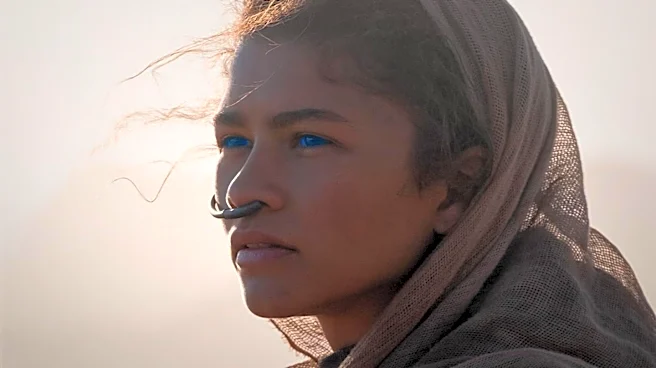
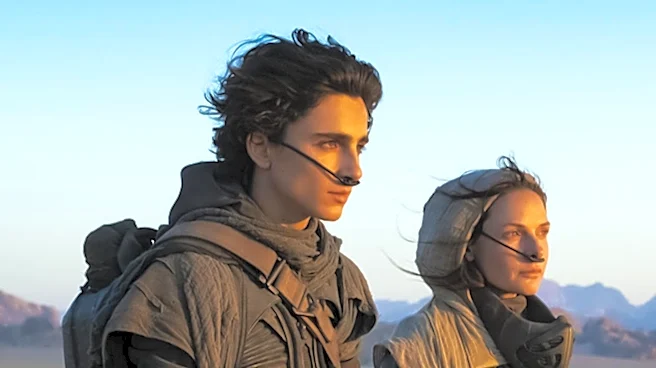
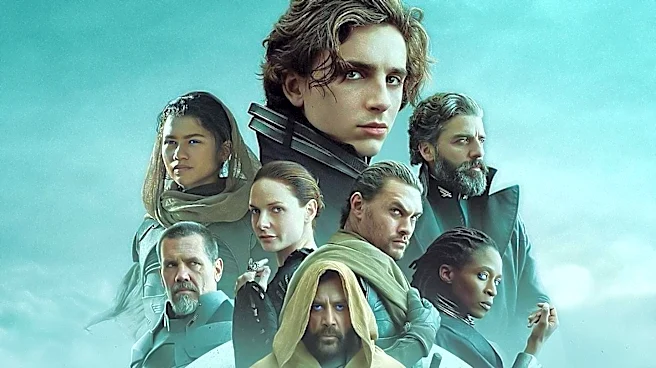
Dune: Part Three, scheduled for release on December 18, 2026, will expand beyond Frank Herbert's 'Dune: Messiah' by integrating key plot points from 'Children of Dune'. The film will feature Paul Atreides' (Timothée Chalamet) children with Chani (Zendaya),
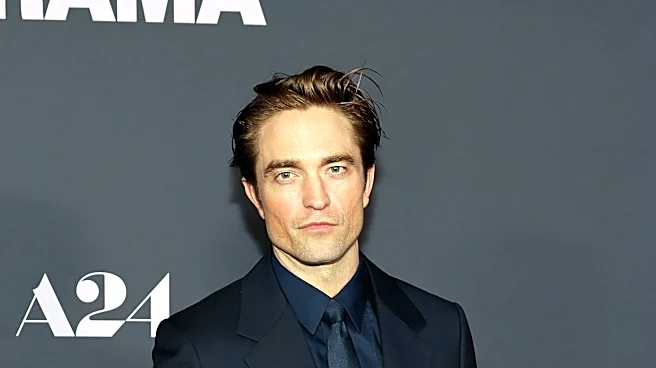
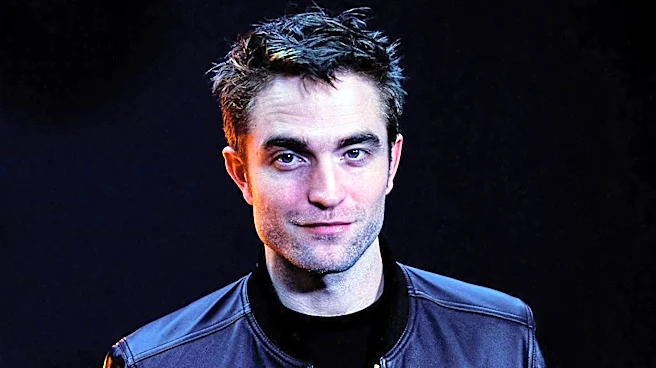
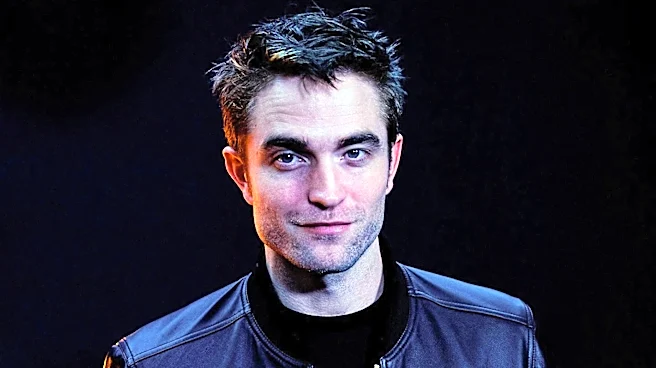
Leto II and Ghanima, portrayed as teenagers by Nakoa-Wolf Momoa and Ida Brooke. This early introduction of the twins, who are only born at the end of 'Dune: Messiah' in the novels, signifies a departure from a strict adaptation of the second book. The latest trailer confirms the inclusion of an assassination plot targeting the twins, a central element from 'Children of Dune'. Robert Pattinson's character, Scytale, is shown questioning Chani about her offspring, hinting at the danger surrounding them. While the film is not expected to fully cover 'Children of Dune', director Denis Villeneuve is drawing from both novels to conclude Paul Atreides' narrative arc.
Why It's Important?
The decision to weave in elements from 'Children of Dune' into 'Dune: Part Three' is significant for several reasons. It indicates a more comprehensive and potentially accelerated narrative for the film series, aiming to provide a more conclusive ending to Paul Atreides' story within Villeneuve's trilogy. By introducing Leto II and Ghanima earlier and incorporating their assassination plot, the film raises the stakes and adds layers of political intrigue and personal peril for the Atreides family. This approach allows the director to explore themes of legacy, power, and the consequences of Paul's reign more deeply, potentially offering a richer and more complex cinematic experience. For fans of the book series, this adaptation strategy suggests a creative interpretation that seeks to maximize the narrative impact within the confines of a trilogy, rather than strictly adhering to a one-book-per-film structure.
What's Next?
With 'Dune: Part Three' set for release on December 18, 2026, anticipation will build around how Denis Villeneuve integrates the complex storylines from 'Dune: Messiah' and 'Children of Dune'. Future trailers and promotional materials are likely to offer more insights into the specific plot points and character developments. The casting of Nakoa-Wolf Momoa and Ida Brooke as the teenage Leto II and Ghanima suggests their roles will be substantial, and their interactions with returning characters like Timothée Chalamet's Paul, Zendaya's Chani, and Florence Pugh's Princess Irulan will be crucial. The film's success will likely influence future adaptations of Frank Herbert's extensive 'Dune' universe, potentially paving the way for further cinematic or television projects that delve into the later books, should Villeneuve's trilogy prove to be a critical and commercial triumph.
Beyond the Headlines
The blending of 'Dune: Messiah' and 'Children of Dune' in the upcoming film highlights a common challenge in adapting extensive literary series: how to condense vast narratives while maintaining thematic integrity and character development. This approach could set a precedent for future adaptations of complex sci-fi or fantasy sagas, demonstrating a willingness to deviate from strict chronological or book-by-book adaptations in favor of a more cohesive cinematic arc. Ethically, it raises questions about fidelity to source material versus creative interpretation for a new medium. Legally, it underscores the creative freedom granted to filmmakers within established intellectual properties. Culturally, the 'Dune' series continues to resonate due to its exploration of power, religion, ecology, and human evolution, and this adaptation strategy aims to bring these profound themes to a wider audience in a compelling, consolidated narrative.