

What's Happening?
Marvel Studios President Kevin Feige has provided details about the setting of 'Avengers: Secret Wars' that suggest a potential ending for 'Avengers: Doomsday.' In an interview with Entertainment Weekly, Feige described the setting of 'Secret Wars' as a 'singular
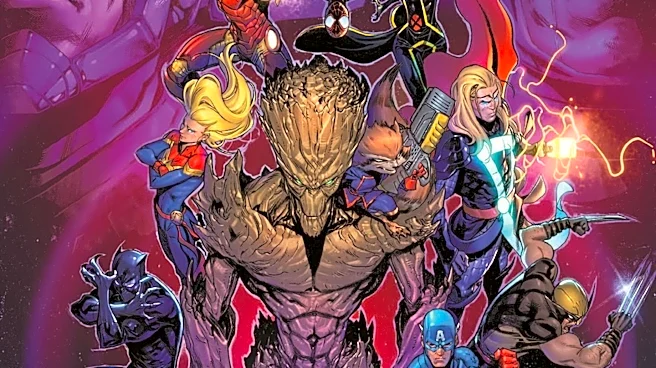
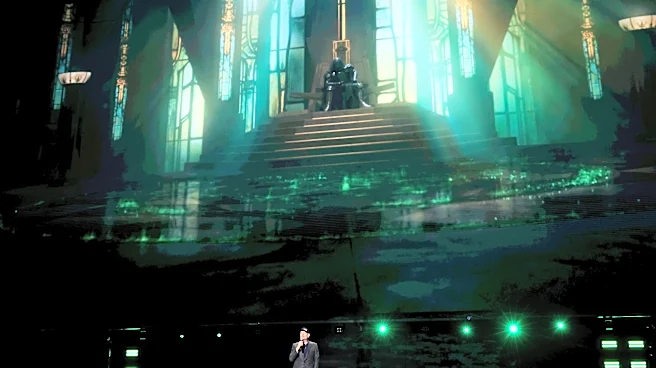
planet where our movie Secret Wars takes place is the imagination gone wild.' This description strongly aligns with Battleworld, a patchwork planet from Jonathan Hickman's 2015 'Secret Wars' comic series, which is formed from the remnants of a destroyed multiverse. Feige also indicated that 'Avengers: Doomsday,' set to release on December 18, draws inspiration from Hickman's 'Time Runs Out' storyline, which precedes the 2015 'Secret Wars' event and involves the collapse of the multiverse. This suggests that 'Doomsday' could conclude with the destruction of the multiverse, leading to the creation of Battleworld, where Doctor Doom might play a pivotal role in its formation and governance. The directors, Joe and Anthony Russo, have also drawn inspiration from Jim Shooter's 1984 'Secret Wars' comics.
Why It's Important?
This potential spoiler from Kevin Feige is significant for several reasons within the entertainment landscape. Firstly, it provides a strong indication of the narrative direction for the culmination of the Multiverse Saga, suggesting a dramatic and potentially catastrophic ending for 'Avengers: Doomsday.' The destruction of the multiverse and the creation of Battleworld would represent a monumental shift in the MCU's status quo, fundamentally altering the reality in which its characters exist. This could lead to a more contained yet creatively expansive universe for future stories. Secondly, it highlights the influence of specific comic book storylines, particularly Jonathan Hickman's work, on the cinematic universe, reassuring fans of the source material while also setting expectations for a complex and epic narrative. The implication that Doctor Doom could be the one to salvage fragments of the multiverse and rule Battleworld positions him as a central figure, potentially elevating his status as a primary antagonist or even an anti-hero in the MCU. This narrative choice could redefine the power dynamics and moral ambiguities within the franchise.
What's Next?
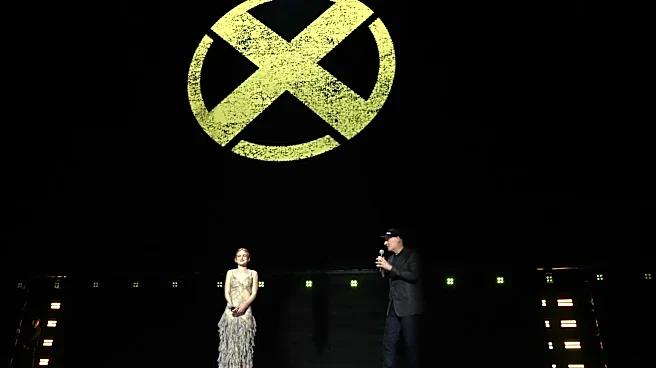
If 'Avengers: Doomsday' concludes with the destruction of the multiverse and the formation of Battleworld, the stage will be set for 'Avengers: Secret Wars' to explore this new reality. The film, scheduled for December 17, 2027, would then likely delve into the implications of a world governed by Doctor Doom, as depicted in Hickman's comics. This could involve various factions of heroes and villains from different realities coexisting, or clashing, under Doom's rule. The narrative possibilities are vast, ranging from resistance movements against Doom to characters adapting to their new, fragmented home. The confirmed 'reset' of the MCU after 'Secret Wars' further supports the idea of a radical shift, allowing for new iterations of characters like the X-Men to emerge in this altered landscape. Audiences will be anticipating how the MCU navigates such a drastic change, and how familiar heroes will cope with a world potentially created and controlled by one of their greatest adversaries.
Beyond the Headlines
The potential ending of 'Avengers: Doomsday' and the subsequent setting of 'Secret Wars' delve into profound themes of creation, destruction, and power. The idea of a single entity, Doctor Doom, salvaging and ruling over fragments of destroyed universes raises ethical questions about ultimate authority and the nature of survival. It explores the concept of a 'necessary evil' where a villain might be the only one capable of preserving existence, albeit on his own terms. This narrative could challenge traditional superhero tropes by presenting a world where the lines between good and evil are blurred, and heroes might find themselves in morally compromising positions. Culturally, such a storyline reflects anxieties about existential threats and the desire for order in chaos, even if that order is imposed by a tyrannical figure. Legally and creatively, the adaptation of such a complex comic book event demonstrates Marvel's ambition to push the boundaries of cinematic storytelling, potentially influencing how other studios approach large-scale, multi-franchise narratives and the reinterpretation of established lore.