




What's Happening?
Bryan Krahn, a 53-year-old training expert and coach for Men's Health, advises individuals, particularly those over 50, to approach weightlifting with a focus on 'movement mastery' rather than solely on increasing load. Krahn, who has maintained his physique
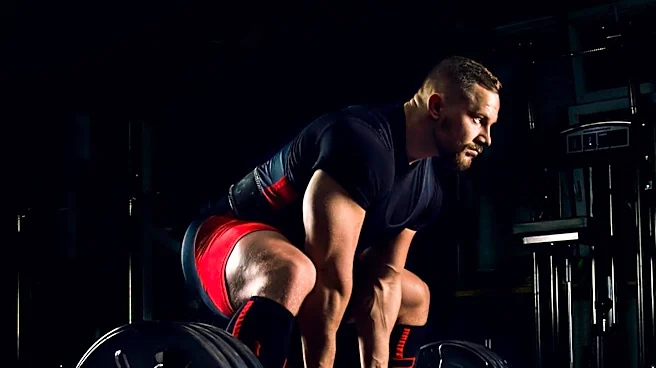
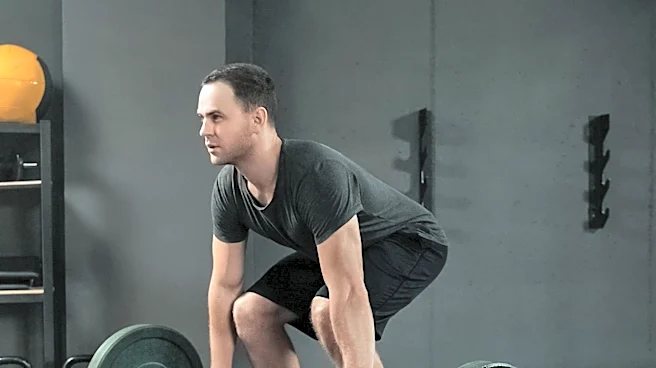
and coached numerous older clients, emphasizes perfecting form in exercises, especially heavy compound lifts like the bench press, squat, and deadlift. He suggests treating these lifts like skills, akin to Olympic athletes meticulously preparing for each movement. Instead of pushing to failure or one-rep maxes, Krahn recommends aiming for four- or five-rep maxes and stopping immediately if any discomfort or pain arises. He also advocates for filming sets to review and refine form, and to reserve 'bust your ass' intensity for safer, more controlled movements like cable work and machines.
Why It's Important?
Krahn's advice is crucial for promoting sustainable and injury-free strength training, especially as individuals age. His emphasis on form over sheer weight can help mitigate the risk of injuries that often sideline older lifters, allowing them to maintain strength and muscle mass for longer. This approach challenges the conventional 'always add more weight' mentality, advocating for a more intelligent and body-aware method of training. For the fitness industry, it highlights the growing need for age-appropriate training methodologies that prioritize longevity and functional strength. This guidance can empower older adults to continue engaging in resistance training safely, contributing to better overall health, bone density, and quality of life, while also serving as a model for younger lifters to build a solid foundation.
What's Next?
Krahn's recommendations are likely to influence training programs designed for older adults and those seeking long-term fitness. We may see a greater emphasis on form coaching, video analysis, and progressive overload strategies that prioritize technique over maximal weight. Fitness professionals might incorporate these principles more explicitly into their certifications and client programming. The broader fitness community could also see a shift in how 'progress' is defined, moving beyond just weight on the bar to include improvements in movement quality and consistency. This could lead to the development of more specialized equipment or training tools that aid in form correction and controlled movements, further supporting Krahn's philosophy.
Beyond the Headlines
Krahn's philosophy extends beyond just physical training; it embodies a mindset of continuous learning and adaptation. Treating lifts as skills implies a dedication to refinement and mastery, which can be applied to various aspects of life. This approach fosters a deeper connection between the individual and their body, promoting self-awareness and mindful movement. Ethically, it underscores the responsibility of trainers to prioritize client safety and long-term well-being over short-term gains or ego-driven lifting. Culturally, it challenges the often-prevalent 'no pain, no gain' mentality, advocating for a more intelligent and sustainable path to strength that respects the body's limits and promotes longevity. This shift could lead to a more inclusive fitness culture where individuals of all ages feel empowered to pursue strength training safely and effectively.