


What's Happening?
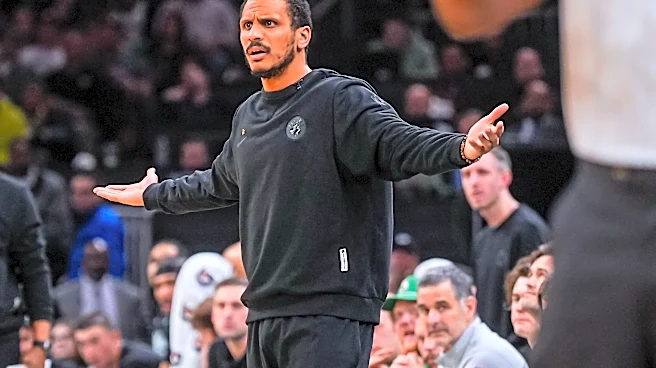
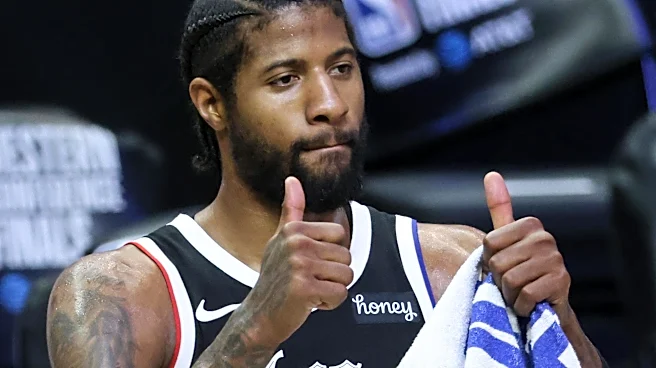
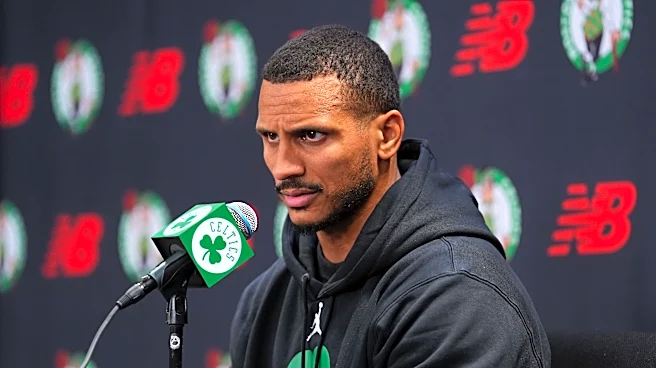
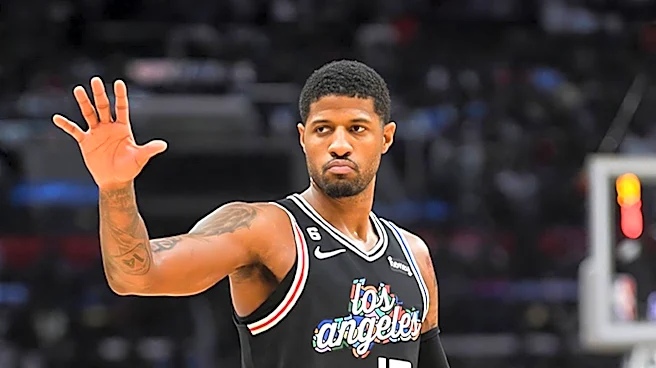
The Boston Celtics' trade of Jaylen Brown for Paul George has significantly improved the team's ability to maintain a consistent playing style throughout entire games, regardless of which players are on the court. According to Hardwood Houdini, George's
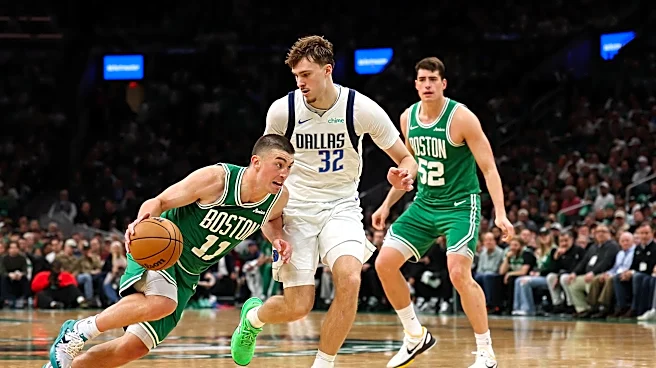
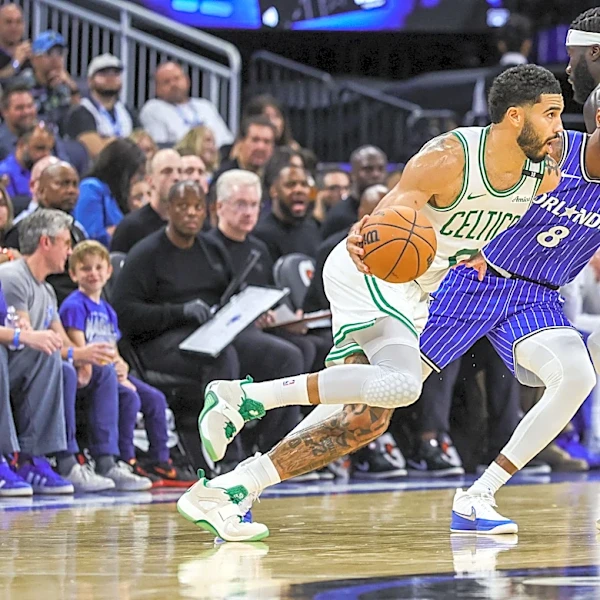
integration has allowed the Celtics to run head coach Joe Mazzulla's offense like a 'well-oiled machine.' Unlike Brown, who was described as more of a one-on-one player, George fits seamlessly into the Celtics' system, which emphasizes shooting, off-ball movement, and ball security. This strategic acquisition ensures that the team's performance does not dip when star player Jayson Tatum is on the bench, as George effectively fills a similar role, launching threes at a high volume and keeping the offense flowing. The Celtics' roster is now composed of players who align with Mazzulla's offensive philosophy, enabling them to execute their game plan for the full 48 minutes.
Why It's Important?
This strategic roster change is crucial for the Celtics' long-term success and playoff aspirations. By having players like Paul George who can maintain the team's offensive identity even when key starters are resting, the Celtics minimize performance fluctuations that often plague teams with less cohesive rosters. This consistency not only boosts their regular-season performance but also prepares them for the rigorous demands of the playoffs, where every minute on the court counts. The ability to run the same system with different player combinations provides Coach Mazzulla with greater flexibility in managing lineups and rotations, potentially reducing player fatigue and optimizing individual performances. This approach could set a new standard for team construction in the NBA, emphasizing systemic fit over individual star power, thereby influencing how other franchises approach trades and player development.
What's Next?
The Celtics are expected to continue leveraging Paul George's versatile play to maintain their high level of performance throughout the current NBA season. This consistent team identity will be particularly beneficial as they prepare for the playoffs, where depth and adaptability are critical. The team's ability to sustain its offensive rhythm, even with varying lineups, will be a significant advantage in high-pressure situations. Other teams in the league will likely observe the Celtics' success with this strategy, potentially leading to a shift in how player acquisitions are evaluated, with a greater emphasis on how new players integrate into existing team systems rather than just their individual statistics. The Celtics' continued dominance could solidify their position as a top contender and influence future trade deadlines and free agency decisions across the league.
Beyond the Headlines
The Celtics' successful integration of Paul George highlights a broader trend in professional sports: the increasing importance of systemic fit and team chemistry over individual talent. While star players are undoubtedly crucial, this move demonstrates that a player who complements the team's established style can have a more profound impact than a high-scoring individual who disrupts the flow. This shift could lead to a re-evaluation of player value, where attributes like off-ball movement, defensive versatility, and passing acumen are prioritized alongside scoring ability. Ethically, it raises questions about player development and whether young talents are being molded to fit specific team philosophies or encouraged to develop a more individualistic style. The Celtics' model suggests that a collective, adaptable approach might be the key to sustained success in modern basketball.