




What's Happening?
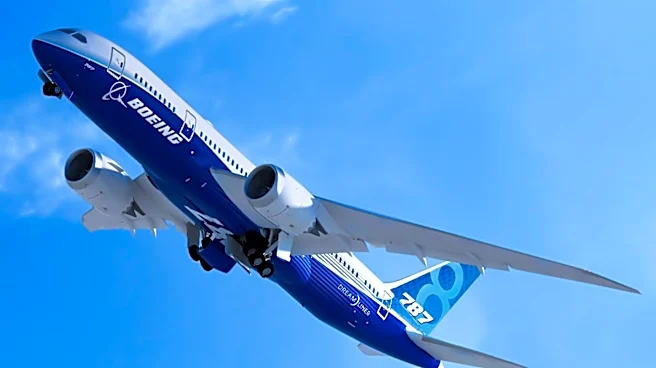
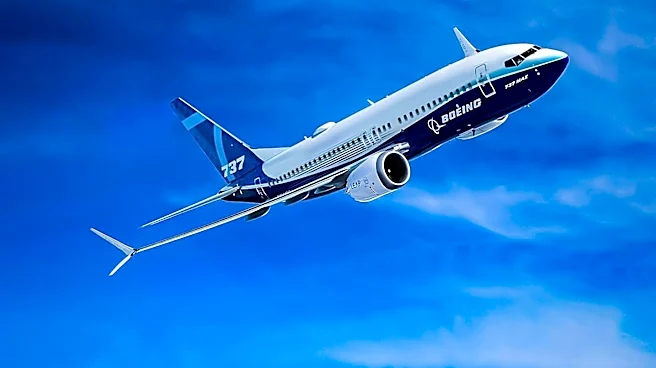
Boeing has successfully completed a series of noise test flights for its 787 aircraft as part of the ecoDemonstrator program. The tests, conducted in collaboration with Rolls-Royce, focused on a modified short engine inlet duct designed to improve fuel
efficiency while maintaining noise levels. The flights took place at Boeing's facility in Glasgow, Montana, under the FAA's CLEEN program. The goal was to achieve up to 0.5% better fuel efficiency without increasing noise, using a new acoustic treatment. The test campaign was completed ahead of schedule, and Boeing is now analyzing the data collected.
Why It's Important?
This development is significant for the aerospace industry as it represents a step forward in balancing fuel efficiency with noise reduction, a key challenge for modern aircraft design. Successful implementation of these technologies could lead to more environmentally friendly aircraft, aligning with global efforts to reduce aviation's carbon footprint. For Boeing, advancements in this area enhance its competitive edge in the market, potentially leading to increased sales and partnerships. The findings from these tests could influence future aircraft designs and regulatory standards for noise and emissions.
What's Next?
Boeing plans to continue analyzing the test data to refine the short inlet design and explore further improvements in fuel efficiency and noise reduction. Future iterations of the design could achieve up to a 2% fuel efficiency gain and additional noise reduction. The company will likely engage with regulatory bodies and industry partners to discuss the implications of these findings and potential applications in commercial aviation. Continued collaboration with Rolls-Royce and other stakeholders will be crucial in advancing these technologies and integrating them into future aircraft models.