




What's Happening?
Boeing plans to reduce its workforce in the commercial airplane division by 5%, according to an email sent to employees on Monday. This division currently employs approximately 50,000 individuals across Washington state, South Carolina, Oklahoma, and
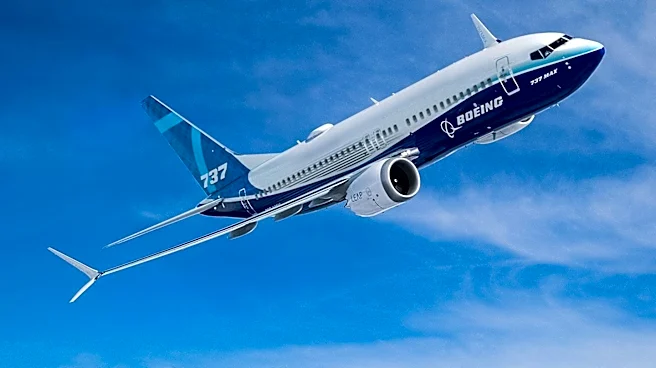
Kansas. Stephanie Pope, CEO and president of the commercial airplane division, stated that the cuts will commence in December and will be implemented through a combination of layoffs, voluntary separations, and early retirements. Notably, Boeing officials in the Wichita area have confirmed that employees in Wichita and Tulsa are not targeted for these reductions. Instead, the company intends to continue hiring in these locations as it works to stabilize the production of its 737 models. Boeing reported a commercial backlog of 6,300 planes during its third-quarter earnings call.
Why It's Important?
Boeing's decision to lay off 5% of its commercial airplane division workforce reflects ongoing challenges within the aerospace industry, likely stemming from production issues and market adjustments. While the layoffs will impact thousands of employees in other states, the exemption of Wichita and Tulsa employees is significant for these regions, indicating a strategic focus on maintaining and potentially growing operations there, particularly for the crucial 737 production. This move suggests that Boeing is prioritizing the stabilization and ramp-up of its key aircraft programs, which are vital for its long-term financial health and market position. The substantial backlog of 6,300 planes underscores the demand for its products, but also highlights the pressure to resolve production bottlenecks and deliver aircraft efficiently. The layoffs, while difficult for affected employees, are part of a broader effort to streamline operations and improve efficiency.
What's Next?
The layoffs in Boeing's commercial airplane division are set to begin in December, and affected employees will receive further details regarding their separation packages and support. For Wichita and Tulsa, the focus will remain on continued hiring and stabilizing 737 production, which could lead to increased job opportunities in these areas. Boeing will likely continue to implement measures to address its production challenges and fulfill its substantial order backlog. The company's performance in the coming quarters will be closely watched by investors and industry analysts, as it navigates these workforce adjustments and production goals. The aerospace supply chain and related industries may also experience ripple effects from Boeing's strategic decisions.
Beyond the Headlines
Boeing's workforce adjustments highlight the cyclical and often volatile nature of the aerospace manufacturing sector. While the company is facing immediate challenges, the long-term demand for commercial aircraft remains strong, as evidenced by its significant backlog. The decision to exempt Wichita and Tulsa from layoffs suggests a strategic investment in specific manufacturing capabilities and a recognition of the skilled workforce in those regions. This could lead to a strengthening of the aerospace ecosystem in these areas, potentially attracting further investment and talent. However, the broader layoffs underscore the human cost of corporate restructuring and the need for robust support systems for displaced workers. The incident also serves as a reminder of the intricate balance between maintaining profitability, managing production, and ensuring employee well-being in a globalized industry.