




What's Happening?
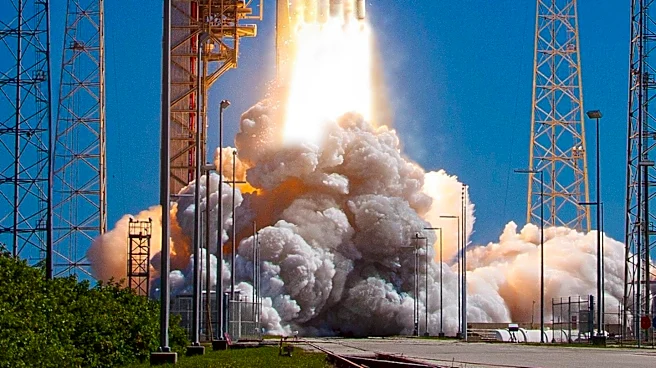
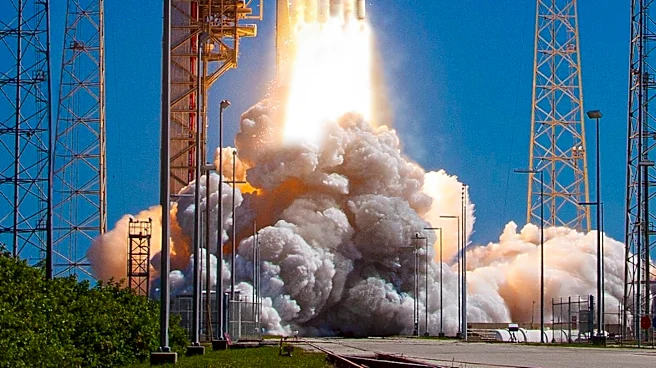
Amazon is scheduled to launch a new batch of 36 Leo internet satellites on Monday, November 23, via an Ariane 6 rocket from Europe's Spaceport in Kourou, French Guiana. This launch comes just eight days after a United Launch Alliance (ULA) Vulcan Centaur
rocket carrying 40 Amazon Leo satellites suffered a problem shortly after launch on November 15, resulting in the loss of the spacecraft. The Ariane 6 mission, operated by Arianespace, will be the fourth Amazon Leo flight for the rocket this year, following previous launches in February, April, and June. Amazon's Leo constellation aims to compete with SpaceX's Starlink, with a long-term goal of over 3,200 satellites in low Earth orbit, though only about 400 have been launched to date. The ULA Vulcan Centaur rocket is currently grounded as ULA investigates the cause of the recent failure.
Why It's Important?
This rapid re-scheduling of Amazon's satellite launch highlights the critical importance of maintaining momentum in the competitive satellite internet market. The failure of the ULA Vulcan Centaur represents a setback for both ULA and Amazon, underscoring the inherent risks and complexities of space launches. For Amazon, diversifying its launch providers across ULA's Atlas V, Blue Origin's New Glenn, SpaceX's Falcon 9, and Arianespace's Ariane 6 is a strategic move to mitigate risks and ensure the continuous deployment of its Leo constellation. The success of the Ariane 6 launch is crucial for Amazon to stay on track with its ambitious broadband internet project, which aims to provide global internet access and compete directly with established players like SpaceX's Starlink. The grounding of the Vulcan Centaur also impacts ULA's reputation and future launch schedules, potentially shifting more business to other launch providers in the short term.
What's Next?
The Ariane 6 rocket carrying 36 Amazon Leo satellites is scheduled to lift off on Monday, November 23, during a 29-minute window opening at 6:09 a.m. EST. The launch will be broadcast live, with coverage beginning approximately 30 minutes prior. Meanwhile, United Launch Alliance will continue its investigation into the November 15 failure of the Vulcan Centaur rocket, which will remain grounded until the cause is identified and a fix is implemented. Amazon will likely continue to utilize its diverse portfolio of launch providers to deploy its remaining satellites, as the company aims to expand its Leo constellation to over 3,200 spacecraft. The performance of both the Ariane 6 and the ongoing investigation into the Vulcan Centaur will be closely watched by the space industry and stakeholders in the satellite internet sector.
Beyond the Headlines
The incident with the ULA Vulcan Centaur and Amazon's subsequent reliance on Ariane 6 underscores the evolving landscape of commercial spaceflight and the increasing demand for reliable launch services. The competitive pressure in the satellite internet sector, driven by companies like Amazon and SpaceX, is accelerating innovation but also exposing the inherent challenges and risks of space technology. This event highlights the importance of redundancy in launch capabilities for large-scale satellite constellations, as a single launch failure can significantly impact deployment timelines and financial investments. The incident also brings into focus the rigorous safety protocols and investigative processes required in the space industry, where even minor malfunctions can lead to substantial losses. The long-term success of these constellations will depend not only on launch reliability but also on the ability to rapidly recover from setbacks and adapt to unforeseen technical challenges.