






What's Happening?
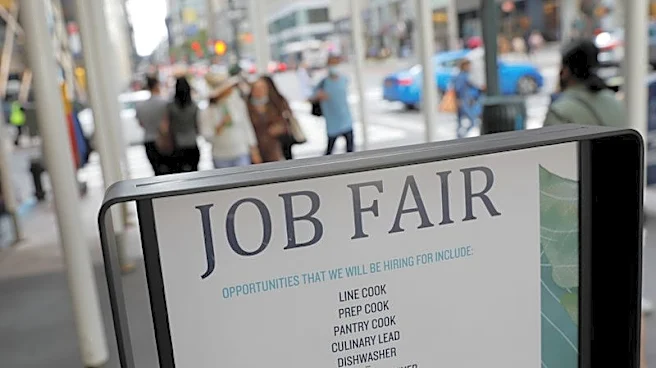
The U.S. labor market is showing signs of cooling, with a slowdown in job growth and a decrease in the foreign-born population affecting workforce participation. Brian Jacobson, Chief Economist Strategist at Annex Wealth Management, discussed the implications
of recent job reports on Federal Reserve policy. He highlighted the Fed's challenge in balancing employment support with inflation control, suggesting that interest rate hikes may not be the most effective tool in the current economic climate. Jacobson also identified investment opportunities in European equities and U.S. construction and industrial sectors, while recommending a cautious approach to fixed income due to potential market volatility.
Why It's Important?
The cooling labor market poses significant challenges for the Federal Reserve as it navigates between fostering employment and curbing inflation. The Fed's decisions will have far-reaching implications for the U.S. economy, influencing everything from consumer spending to business investment. The potential shift in monetary policy could impact various sectors differently, with some industries benefiting from lower interest rates while others may face increased costs. Investors and businesses will need to adapt to these changes, potentially altering their strategies to mitigate risks and capitalize on new opportunities.
What's Next?
As the Federal Reserve assesses its next steps, the upcoming meetings and economic data releases will be critical in shaping its policy direction. Stakeholders across the economy, including businesses, investors, and policymakers, will be closely watching for signals from the Fed regarding interest rates and other monetary measures. The labor market's trajectory will continue to be a key factor in these decisions, with potential adjustments in policy aimed at stabilizing employment and controlling inflation. The evolving economic landscape will require ongoing analysis and adaptation from all sectors.