





What's Happening?
StoneX analyst Ben Klieve has downgraded Cal-Maine Foods Inc. (NASDAQ: CALM) from a 'Buy' to a 'Hold' rating. This comes as the company faces a significant headwind from materially higher year-over-year feed costs, particularly impacting its low-margin
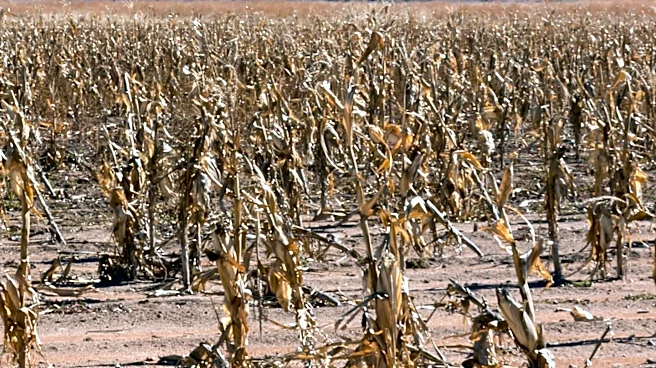
commodity egg segment. Front-month corn prices have surged by 15% since mid-August, contributing to an expected increase of over 10% in feed input costs for fiscal year 2027. Cal-Maine Foods' shares have already experienced a decline, falling 2% on Friday and a total of 5.3% over three days, marking a second consecutive week in the red. Despite the downgrade, Klieve maintains a favorable long-term sentiment for the company, citing its pivot towards higher-margin specialty eggs and growth in prepared offerings as valuable catalysts. However, the immediate outlook suggests muted profitability into fiscal year 2028.
Why It's Important?
This downgrade highlights the vulnerability of agricultural companies like Cal-Maine Foods to fluctuations in commodity prices, specifically feed costs. Rising corn prices directly impact the operational expenses and profitability of egg producers, potentially leading to reduced margins and financial pressure. For investors, a 'Hold' rating suggests a period of uncertainty and potentially limited upside in the near term, despite long-term positive outlooks. The shift towards higher-margin specialty eggs and prepared offerings by Cal-Maine Foods indicates a strategic effort to mitigate the impact of volatile commodity markets and diversify revenue streams. This strategy is crucial for maintaining stability and growth in an industry susceptible to external factors such as feed costs and market cycles. The situation underscores the importance of supply chain resilience and diversification for food producers in the U.S. agricultural sector.
What's Next?
Cal-Maine Foods will likely continue to navigate the challenges posed by elevated feed costs. The company's strategy of pivoting towards cost-plus contracts for its specialty egg and prepared offerings segments is expected to partially offset the impact of rising input costs. However, the commodity egg segment, which operates on lower margins, will remain particularly susceptible. Investors will be closely watching for any further developments in commodity markets, especially corn prices, as these will directly influence the company's profitability. Future earnings reports and management guidance will provide more clarity on the effectiveness of Cal-Maine Foods' mitigation strategies and the overall financial outlook for fiscal year 2028. The company's ability to expand its higher-margin product lines will be critical in determining its performance in the coming years.
Beyond the Headlines
The situation with Cal-Maine Foods reflects a broader trend in the U.S. food industry where producers are grappling with increasing input costs and supply chain disruptions. This can lead to higher prices for consumers, impacting household budgets and potentially contributing to inflationary pressures. The emphasis on specialty eggs and prepared offerings by Cal-Maine Foods also points to evolving consumer preferences for value-added and differentiated food products. This shift could encourage other agricultural companies to innovate and diversify their product portfolios to enhance resilience against market volatility. Furthermore, the analyst's long-term positive sentiment, despite short-term challenges, suggests that strategic adaptations and market positioning can be more influential than immediate cost pressures in the long run for well-established companies in the food sector.