






What's Happening?
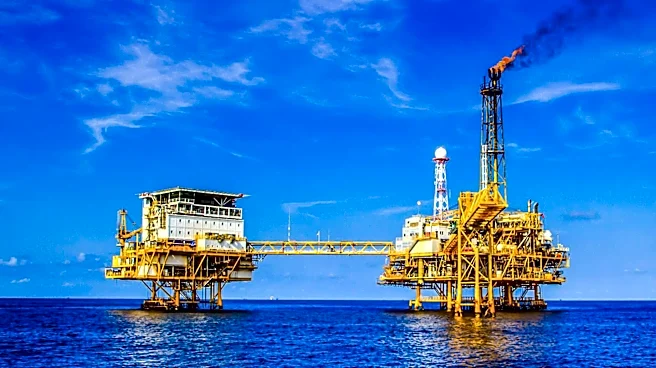
Pakistan and Turkiye have officially commenced joint offshore oil and gas exploration activities in Pakistan's Indus and Makran basins. This initiative marks a significant step in bilateral energy cooperation, with Turkiye's seismic research vessel, 'Oruç
Reis,' arriving in Karachi to conduct extensive seismic surveys. The exploration aims to identify commercially viable hydrocarbon reserves in Pakistan's largely underexplored offshore regions. According to Pakistan's Petroleum Minister Ali Pervaiz Malik, the Indus-C Block alone is estimated to contain between 1.5 to 2 trillion cubic feet of gas. The project involves a partnership between Turkish Petroleum Corporation (TPAO) and Pakistan's national energy companies, including Oil and Gas Development Company Limited (OGDCL), Pakistan Petroleum Limited (PPL), and Mari Energies. TPAO holds a 25% working interest in the Eastern Offshore Indus-C Block. This renewed focus on offshore exploration comes after an 18-year hiatus in competitive offshore bidding rounds, with Pakistan launching the Offshore Bid Round 2025 to offer 40 offshore blocks. Data acquisition and interpretation from the current seismic surveys are expected to be completed within six months, with drilling operations targeted to begin next year.
Why It's Important?
This joint exploration effort is crucial for Pakistan's energy security and economic stability. Pakistan has historically faced energy deficits and high exposure to international supply disruptions, making the discovery of indigenous hydrocarbon resources vital. Deputy Prime Minister Ishaq Dar highlighted that Pakistan's natural resources, including hydrocarbons, are conservatively estimated to be worth between $8 trillion and $10 trillion, underscoring the potential economic transformation if significant reserves are found. For Turkiye, this collaboration strengthens its strategic energy partnerships and allows it to leverage its expertise gained from major offshore discoveries in the Black Sea. The project also signifies a deepening of bilateral ties between Pakistan and Turkiye, extending cooperation beyond traditional areas into critical economic sectors. Successful discoveries could reduce Pakistan's reliance on energy imports, stabilize fuel prices, and attract further foreign investment into its energy sector, contributing to long-term economic growth and resilience against global energy market volatility.
What's Next?
The immediate next step involves the 'Oruç Reis' vessel conducting three-dimensional seismic data collection across 670 square kilometers in the Indus-C Block over approximately two months, followed by 2D seismic surveys in the Makran blocks. Data acquisition and interpretation are projected to conclude within six months. Following this, both nations aim to commence drilling operations at designated sites next year, specifically targeting the fourth quarter of 2027. The success of these initial surveys will determine the scale and pace of subsequent exploration and development activities. Further, the two countries have signed additional agreements on cooperation in the minerals sector, including joint ventures for developing antimony resources in Balochistan and exploring copper, gold, and associated mineral deposits in Chagai, Balochistan. These agreements indicate a broader strategic partnership in resource development, with ongoing technical exchanges and capacity building in geological and mineral resource development also planned.
Beyond the Headlines
The renewed push for offshore exploration carries significant long-term implications for Pakistan's geopolitical standing and economic trajectory. A substantial discovery could fundamentally alter Pakistan's energy landscape, shifting it from an energy-importing nation to a potentially self-sufficient or even exporting one. This would not only alleviate economic pressures but also enhance its strategic autonomy in a volatile region. The collaboration with Turkiye also signals a broader trend of South-South cooperation in critical resource development, potentially reducing reliance on traditional Western energy partners and technologies. Environmentally, while the pursuit of fossil fuels raises concerns about climate change, the immediate focus for Pakistan is energy security and economic development. The project will likely face scrutiny regarding environmental safeguards and sustainable extraction practices. Furthermore, the success of this venture could inspire other nations with underexplored offshore basins to pursue similar international partnerships, fostering a new era of global energy exploration driven by emerging economies.